
Montenegro vs Other Expat Destinations: Complete Comparison Guide
How does Montenegro compare to Croatia, Portugal, Greece, Albania, and Bulgaria for expats? Complete comparison of costs, lifestyle, visas, and quality of life.
8 min read
Montenegro occupies a unique niche among European expat destinations—combining Mediterranean beauty with Balkan affordability while operating outside the EU and Schengen frameworks. Understanding how it compares to alternatives clarifies whether it's your ideal choice.
Quick Takeaways
- •Montenegro: Euro currency without EU/Schengen membership
- •More affordable than Croatia with similar Adriatic beauty
- •Less established expat infrastructure than Portugal or Spain
- •More developed than Albania but pricier
- •Coastal focus vs Bulgaria's interior orientation
Montenegro's position in the expat landscape is distinctive. It uses the Euro without being an EU member, offers Mediterranean lifestyle without Schengen integration, and provides Balkan affordability in one of Europe's most scenic settings. These characteristics make it ideal for some expats while disqualifying it for others. Montenegro's EU candidacy status creates a time-sensitive calculation that static country comparisons cannot capture—the country you evaluate today may look fundamentally different after accession, and the comparison exercise itself shifts depending on whether you are evaluating Montenegro as it is now or as it might become within the decade.
Comparisons with popular alternatives reveal Montenegro's specific strengths and limitations. No destination is universally best—the question is which trade-offs align with your priorities, timeline, and lifestyle preferences. The speculative dimension of Montenegro's future adds a layer of complexity that settled EU destinations do not carry, rewarding those who can tolerate uncertainty and penalizing those who need predictability in their long-term planning.
Montenegro vs Croatia
Croatia represents Montenegro's most natural comparison—both countries share the Adriatic coastline, similar cultural roots, and comparable scenic beauty. The differences lie in scale, development, and European integration.
Croatia joined the EU in 2013 and Schengen in 2023, providing residents with European freedom of movement that Montenegro cannot offer. For expats prioritizing EU rights—whether for business, travel, or long-term security—Croatia's membership matters significantly.
Montenegro is substantially more affordable. Rental costs in Kotor run 30-50% below similar properties in Dubrovnik. Dining, groceries, and services follow similar patterns. For budget-conscious expats, Montenegro stretches resources considerably further.
Croatia's tourism infrastructure is more developed, meaning more restaurants, cultural events, and services year-round. Montenegro's seasonal swings are more pronounced—summer bustle gives way to winter quiet more dramatically than in established Croatian destinations.
Croatia's coastline extends much further, offering more variety in destinations. Montenegro concentrates its beauty intensely but in a small area. Those wanting to explore extensively may find Croatia's scale advantageous; those preferring intimate familiarity may prefer Montenegro's compactness.
The EU membership question compounds over years in ways that initial cost comparisons cannot capture. An expat building a business in Croatia can serve EU clients without cross-border complications, employ EU nationals freely, and access EU funding programs. The same entrepreneur in Montenegro faces trade barriers, work permit requirements for EU hires, and exclusion from programs that Croatian competitors access routinely. For retirees or remote workers, the membership difference matters less—your daily life is shaped by local conditions, not trade policy. But for those building businesses or seeking permanent European roots, Croatia's institutional integration provides advantages that no amount of Montenegrin affordability can offset. This distinction clarifies with time rather than at the point of decision.

Montenegro vs Portugal
Portugal has become the default European expat destination, particularly for Americans and remote workers. Comparing Montenegro reveals different models of expat life.
Portugal's expat infrastructure is vastly more developed. English is widely spoken, bureaucratic processes are documented in English, and established expat communities provide support networks. Montenegro requires more self-reliance and language adaptation.
Both countries offer Euro currency, eliminating exchange rate concerns. But Portugal's EU and Schengen membership provides freedom of movement across Europe that Montenegro's independent status cannot match.
Costs in Montenegro are lower than Portuguese urban centers, though less than might be expected. Lisbon and Porto have become expensive; rural Portugal remains affordable. Montenegro's coastal towns roughly match rural Portuguese pricing.
Climate differs meaningfully. Montenegro's Adriatic coast has distinct seasons with cool winters; Portugal's Algarve maintains mild weather year-round. For those seeking consistent warmth, Portugal has advantages.
Portugal's size and variety dwarf Montenegro. Cities, beaches, countryside, islands—Portugal offers weeks of exploration. Montenegro delivers concentrated beauty in a country you can drive across in four hours. Scale preferences matter here.
The infrastructure gap between the two countries reveals itself not in dramatic failures but in accumulated small frictions. Portugal's motorways flow smoothly; Montenegro's mountain roads demand attention. Portuguese bureaucracy operates online increasingly; Montenegrin administration requires physical presence and patience. Portuguese healthcare covers more specialties locally; Montenegro refers complex cases abroad. Each individual limitation is entirely manageable, but the sum creates a different daily experience. Expats who have lived in both countries often describe Portugal as a place where systems work and Montenegro as a place where relationships work—and the preference between those two modes of functioning is deeply personal rather than objectively measurable.
Deciding where to live is slow work, and most of the useful thinking happens away from the screen — walking, cooking, on a train. Audible's 30-day free trial — suits that stage: a few books about places you're considering, listened to before you commit to anything.
Affiliate disclosure: the Audible link above is an affiliate link. If you start a trial through it, Expat Blueprint may earn a small commission at no extra cost to you. It never changes what we recommend. Read the full disclosure.
If this is the part you keep circling back to, Find Your Place is the workbook we built around exactly that question — where fits my life? See how it works.
Montenegro vs Greece
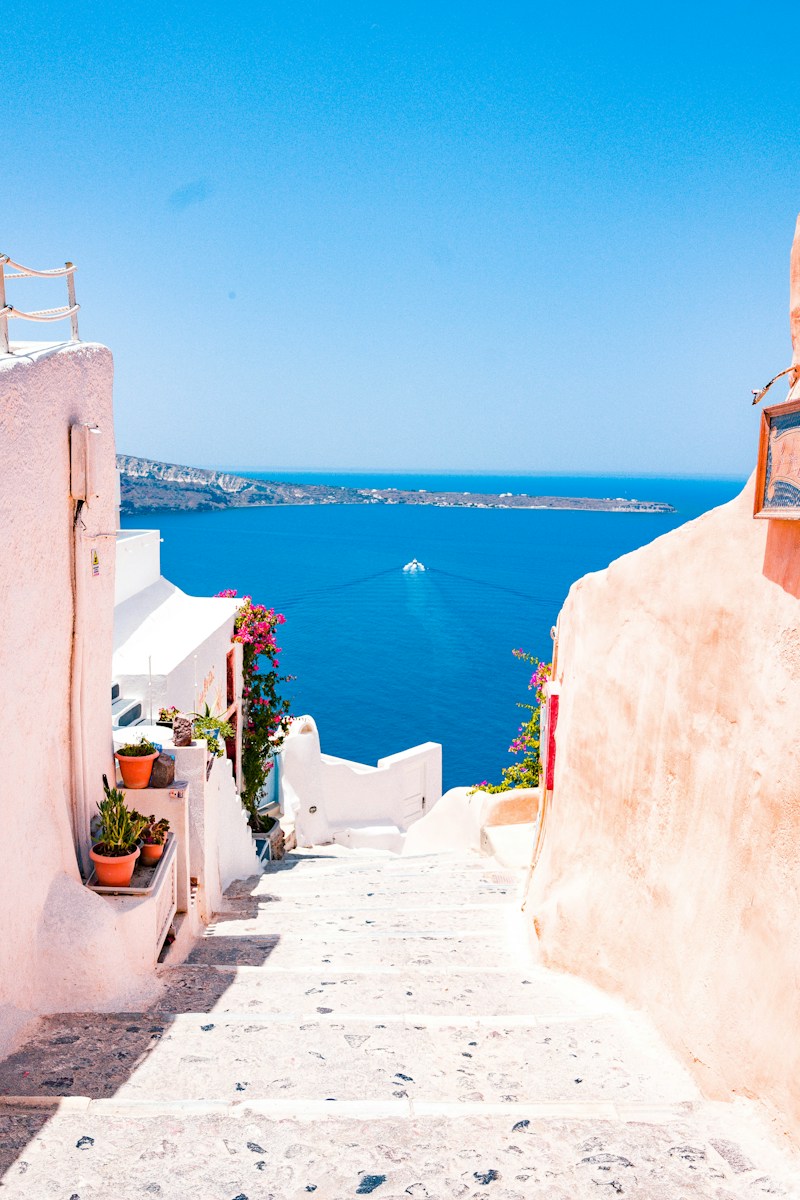
Greece offers Mediterranean lifestyle with EU membership, ancient history, and extraordinary island variety. Montenegro offers a different Adriatic character with Balkan flavor.
Greece's island geography creates choices Montenegro cannot offer. Hundreds of islands with distinct characters means finding your perfect match; Montenegro's compact mainland concentrates options but limits variety.
Both countries offer affordable coastal living by Northern European standards. Greece's tourist-heavy islands (Santorini, Mykonos) are expensive; quieter islands and mainland Greece match or beat Montenegro's pricing.
Greece's Schengen membership and EU citizenship pathway provide European advantages Montenegro lacks. For those building toward European residency, Greece offers clearer long-term rights.
Montenegro's bureaucracy is simpler than Greece's notorious administrative complexity. Residence permits, property purchase, and business registration proceed more straightforwardly in Montenegro's smaller system.
Language considerations differ. Greek's unique alphabet and limited relation to other languages makes it challenging; Montenegrin/Serbian uses both Latin and Cyrillic but is grammatically complex. Neither is easy, but Montenegrin's Latin script option eases initial navigation.
Island hopping creates a fundamentally different expat psychology than mainland commitment. Greece enables perpetual exploration—the next island always promises something different, and many expats spend years moving between Crete, Corfu, the Cyclades, and the Dodecanese without ever settling permanently. Montenegro rewards the opposite instinct: deep local roots in one community, where knowledge accumulates and relationships deepen over years in the same streets and cafés. Neither psychology is superior, but understanding which one matches your temperament is essential. The perpetual explorer will find Montenegro confining within two years; the community builder will find Greece's island-hopping culture preventing the depth they crave.
Montenegro vs Albania
Albania, Montenegro's southern neighbor, has emerged as an ultra-affordable European option. The comparison illuminates trade-offs between cost and development.
Albania is significantly cheaper than Montenegro across all categories. Rent, food, and services cost 30-50% less. For expats optimizing purely for budget, Albania stretches money further.
Montenegro's Euro currency provides stability Albania's lek cannot match. Currency exchange concerns, limited international banking, and financial infrastructure challenges are real in Albania; Montenegro's Euro adoption eliminates these.
Infrastructure and development favor Montenegro. Roads, internet, and services are more reliable. Tourist infrastructure is more established. The basics of daily life require less navigation.
Both countries are non-Schengen, but Montenegro's EU candidate status is more advanced, potentially leading to membership (and Schengen integration) earlier. Albania's EU path is longer.
Albania's larger size offers more geographic variety—beaches, mountains, cities, and archaeological sites spread across substantially more territory. Montenegro concentrates its assets in smaller space, trading variety for accessibility.
The Euro advantage compounds beyond exchange rate convenience into banking access, international transfers, and financial planning simplicity that Albania's lek cannot match. Receiving payment in Euros to a Montenegrin bank account involves no conversion. Paying European bills, transferring money to family, or making online purchases in the continent's dominant currency happens without the friction, fees, and uncertainty that lek-to-euro conversions introduce. For expats managing finances across multiple countries—which describes most of them—this frictionless integration with the European financial system represents a daily convenience that Albania's lower prices cannot entirely offset. The currency question alone keeps many borderline cases on the Montenegrin side of the decision.
Montenegro vs Bulgaria
Bulgaria, as an EU member, offers different trade-offs than non-member Montenegro. The comparison highlights coastal vs interior orientations.
Bulgaria is an EU member but not in Schengen (as of early 2024), providing partial European integration. Freedom to live and work across the EU applies; border-free travel does not yet. Montenegro offers neither but uses the Euro while Bulgaria uses the lev.
Bulgaria's economy and job market are substantially larger. Those seeking local employment find more opportunities; Sofia's tech scene provides possibilities Montenegro's small market cannot.
Montenegro's coastal beauty exceeds Bulgaria's Black Sea offerings. The Adriatic coast and Bay of Kotor represent world-class scenery; Bulgaria's coast, while pleasant, doesn't compare. For those prioritizing coastal lifestyle, Montenegro wins clearly.
Bulgaria is cheaper overall, particularly in Sofia and interior cities. Coastal Bulgarian towns during summer approach Montenegrin pricing; the interior maintains significant cost advantages.
Bulgaria's larger expat community, particularly in Sofia and Bansko, provides social infrastructure Montenegro lacks. Those wanting established expat networks find them more readily in Bulgaria.
Montenegro wins for retirees seeking affordable European coastal life without needing EU work rights or extensive expat infrastructure. The combination of Euro stability, stunning scenery, low costs, and peaceful environment creates ideal retirement conditions.
Remote workers wanting natural beauty over established digital nomad scenes find Montenegro rewarding. Less crowded coworking spaces, more affordable housing, and genuine Mediterranean lifestyle without Lisbon's crowds appeal to those valuing peace over scene.
Yacht and sailing enthusiasts benefit from Montenegro's Adriatic access and Porto Montenegro's facilities. The maritime lifestyle is accessible and affordable compared to Croatian or French alternatives.
Property investors betting on EU accession appreciation find Montenegro's current prices attractive. If and when Montenegro joins the EU, property values should rise toward Croatian levels—significant upside for those willing to hold long-term.
The long-term value of choosing quality over convenience reveals itself gradually. Expats who settle in Montenegro often describe a shift that happens around the second or third year—when the initial frustrations with limited infrastructure, seasonal swings, and small-country constraints begin to feel less like sacrifices and more like the natural shape of a life they have chosen. The Bay of Kotor at dawn, the mountain air in Durmitor after rain, the simplicity of a konoba lunch with locals who know your name—these are not compensations for what Montenegro lacks but the substance of what it offers. The comparison frameworks that feel essential during the decision-making phase become less relevant as lived experience replaces theoretical trade-offs.
Those prioritizing natural beauty and outdoor lifestyle over urban sophistication or variety find Montenegro's concentrated assets sufficient. The Bay of Kotor, Durmitor, and Adriatic beaches provide world-class nature in compact, accessible form.
Montenegro is wrong for those needing EU freedom of movement, established expat communities, extensive international school options, or variety in destinations. Understanding your priorities clarifies whether Montenegro's specific strengths match your needs.
Choosing Your Path
Montenegro's position as a European destination is genuinely unique—Euro currency without EU membership, Mediterranean beauty with Balkan affordability, stunning nature with limited urban sophistication. No other destination offers exactly this combination, which makes it perfect for some expats and wrong for others.
The comparison that matters isn't objective quality—all these destinations offer excellent expat lives. The question is fit. Montenegro suits those who value beauty over variety, peace over infrastructure, affordability over EU rights, and nature over urban options. If those priorities match yours, Montenegro may be exactly right. If not, the alternatives offer what you're seeking. Choose based on your actual priorities, not abstract rankings.
Written by
Carl S Moller
Founder & Editor, Expat Blueprint
Carl S Moller is the founder and sole editor of Expat Blueprint. He researches and writes every guide himself, working from immigration ministries, tax authorities, national statistics and recent first-hand reporting rather than claiming to have lived in all sixteen countries covered.
Keep the thread going
One reflective note every few weeks, and 20% off anything in the workbook shop the moment you sign up. The code is valid through 31 August 2026.
Unsubscribe any time. We never share your address. The 20% code is valid through 31 August 2026.