Living in Vietnam as an Expat
Dynamic cities, incredible food, and some of the lowest costs in Asia make Vietnam irresistible for budget-conscious expats.
What You Need to Know
Vietnam represents the frontier of Southeast Asian expat destinations – more challenging than Thailand, less developed than Malaysia, but offering an energy and value proposition that draws those seeking something raw and real. The country is changing rapidly, and being here now means experiencing transformation in real time.
What makes Vietnam compelling is the combination of extremely low cost of living, genuine cultural depth, remarkable food culture, and a society that is simultaneously traditional and rapidly modernizing. The hustle and energy of Vietnamese cities is palpable, and the entrepreneurial spirit is infectious.
However, Vietnam is not an easy country. The language is genuinely difficult, bureaucracy is opaque, the traffic is legendary, and many things that are simple elsewhere require more effort here. Those who thrive in Vietnam tend to be adaptable people who enjoy challenges and find comfort in discomfort.
The war that Americans call Vietnam and Vietnamese call the American War ended fifty years ago, but its shadow falls across daily interactions in ways that can catch newcomers off guard. The Vietnamese approach to this history is more complex than simple resentment – there is pride in victory, pragmatic interest in American commerce, genuine hospitality toward individual Americans, and occasional reminders that the damage was real. Most expats report encountering no hostility, but understanding that your country's history here is present in the landscape and in living memory helps navigate with appropriate awareness.
Vietnam's economic trajectory over the past three decades represents one of the most dramatic poverty reductions in human history. The country that barely fed itself in the 1980s now exports rice globally; the bicycle-dominated streets of memory are now rivers of motorbikes heading toward cars. This transformation is not complete – development remains uneven, rural poverty persists, and infrastructure struggles to keep pace with growth – but the direction is unmistakable. Being here now means witnessing a society in the midst of becoming something new, with all the energy and chaos that transformation implies.
Who Typically Moves Here and Why
English teachers form a large portion of the expat community, drawn by relatively good wages for the region, low cost of living, and the ability to save money while experiencing a fascinating culture. Teaching provides a visa pathway that other work often does not.
Digital nomads have discovered Vietnam's exceptional value, with cities like Da Nang and Ho Chi Minh City offering developed infrastructure at costs that make other destinations seem expensive. The ability to live well on very modest income draws the location-independent crowd.
Entrepreneurs see opportunity in Vietnam's rapid development and growing middle class. From restaurants and bars to tech startups and manufacturing, those with ideas and capital find a market with genuine potential, though navigating the business environment requires local knowledge.
Adventurous retirees who want their pensions to stretch maximally find Vietnam offers extraordinary value. Those comfortable with more challenge and less infrastructure find they can live remarkably well on modest fixed incomes.
Food enthusiasts and those seeking cultural immersion come specifically for Vietnamese cuisine and culture. The depth of regional food traditions, the emphasis on fresh ingredients, and the integration of food into daily life attract those who prioritize these experiences.
Who Vietnam Might NOT Be Ideal For
If you need everything to be easy and convenient, Vietnam will exhaust you. Simple tasks often require more effort than expected, communication barriers are real, and the patience required for daily life exceeds what many can sustain.
Those who cannot tolerate noise and chaos should look elsewhere. Vietnamese cities are loud – motorbike horns, construction, street activity – and the traffic is genuinely overwhelming for many newcomers. If you need quiet and order, Vietnam will not provide it.
People requiring stable, long-term visa options will find Vietnam frustrating. The visa situation is complex and constantly changing, with few good options for those seeking permanent residency. This creates uncertainty that some find untenable.
If you cannot function without speaking the local language and will not invest in learning Vietnamese, daily life will remain frustrating. English proficiency is growing but not universal, and the depth of experience available to Vietnamese speakers is far greater.
Those who struggle with ambiguity and prefer clear rules should know that Vietnam operates on a different logic. What is possible often depends on relationships, the rules are applied flexibly, and certainty about how things work is elusive.
Overall Cost of Living
Vietnam offers among the lowest costs of living in Southeast Asia while providing genuine urban infrastructure. The value available here for those earning in Western currencies is extraordinary, enabling lifestyles that would be impossible at similar income levels elsewhere.
Housing costs are remarkably low, even in major cities. Apartments that would cost thousands in Western cities rent for hundreds of dollars. While luxury options exist at higher prices, comfortable living is achievable at costs that seem impossibly low to newcomers.
Food represents perhaps the best value of any category. Street food and local restaurants offer delicious, nutritious meals at prices that barely register. The food culture is so developed and affordable that cooking at home becomes optional rather than necessary for budget reasons.
Transportation costs are minimal. Motorbike ownership is cheap, grab and taxi apps provide affordable rides, and general getting around costs far less than any Western country. Even domestic flights are remarkably inexpensive.
The overall picture allows genuinely comfortable living on budgets that would mean poverty elsewhere. Those with normal professional incomes can access lifestyles that would require substantial wealth in developed countries. The value proposition is exceptional for those who can navigate the challenges.
Daily Life & Lifestyle Reality
Daily life in Vietnam operates at a pace and intensity that overwhelms some visitors but energizes others. Mornings start early – breakfast pho at street stalls, coffee with condensed milk on tiny plastic chairs – and the rhythm of the street takes over.
Traffic dominates the experience of Vietnamese cities in ways that must be experienced to be understood. The rivers of motorbikes, the apparent chaos that somehow flows, the horn as communication rather than aggression – all require adjustment and eventually become normal.
Street life is the life in Vietnam. Activities that would happen indoors elsewhere happen on sidewalks here – cooking, eating, socializing, working, exercising. The blurring of public and private space creates a vitality that many find addictive.
Bureaucracy and practical tasks require patience and often help from Vietnamese speakers. Getting things done may take longer and involve more steps than expected. Relationships and local knowledge smooth many paths that seem blocked to newcomers.
The sense of a society in rapid transformation is constant. Construction everywhere, new businesses opening, visible changes from month to month – Vietnam is becoming something new in real time, and being part of that energy appeals to many expats.
The tiny plastic chairs that seemed merely cute on first encounter become symbols of a particular approach to life. Sitting low to the ground, knees above hips, watching the street from pavement level – this is how Vietnam eats, drinks, socializes. The perspective shift is literal: you see the city differently from down there. Learning to be comfortable on the plastic chair, to occupy it with the casual ease of locals rather than tourist awkwardness, marks a transition in how you inhabit Vietnamese space.
Hanoi and Ho Chi Minh City offer genuinely different experiences of Vietnam. Hanoi is older, more traditional, more caught between preservation and development, with four seasons that include a genuine winter chill. Saigon (as most still call it) is younger, more commercial, more purely energetic, with tropical heat year-round. Da Nang offers beach and balance, positioned as the lifestyle alternative to the intensity of the major cities. The choice of city matters as much as the choice of country.
Cultural Adjustments & Common Surprises
Vietnamese communication styles differ significantly from Western norms. Directness is often avoided, face is preserved carefully, and what is said may differ from what is meant. Learning to read situations and interpret carefully takes time and attention.
The concept of personal space operates differently. Queuing is more competitive, physical proximity is closer, and questions that would seem intrusive elsewhere are normal. Adjusting expectations about privacy and personal boundaries is necessary.
Family obligations run deep and shape Vietnamese society in fundamental ways. Understanding the central role of family helps interpret behaviors and decisions that might otherwise seem puzzling. Holidays and family events take priority over almost everything.
The Vietnamese relationship with rules is pragmatic rather than absolute. What is officially prohibited may be tolerated, what is permitted may be blocked. Navigating this requires reading situations rather than relying on stated rules.
Age and hierarchy shape social interactions in ways that egalitarian Westerners may find uncomfortable. Deference to elders and those of higher status is expected, and understanding where you fit in various hierarchies helps navigate situations appropriately.
Karaoke in Vietnam is not just entertainment but social infrastructure. The private karaoke room is where business relationships are sealed, where friendships are demonstrated, where you show willingness to be vulnerable in ways that other contexts do not allow. Declining too many karaoke invitations sends signals about your seriousness as a social participant. Learning a few Vietnamese songs, or at least committing fully to the performance of English ones, opens doors that professional competence alone does not. The discomfort of singing badly in front of colleagues is part of the point – shared vulnerability builds trust.
The Vietnamese approach to alcohol in professional contexts requires navigation. The toasting culture at business dinners, the expectation of drinking with clients and partners, the social lubrication that alcohol provides – all play larger roles than in many Western professional contexts. Refusing entirely marks you as outsider; drinking competitively earns respect but carries obvious risks. Finding your balance, learning acceptable ways to moderate without seeming unfriendly, is social skill that develops with time and attention.
Saying 'no' directly in Vietnamese culture creates loss of face for both parties, so refusals are communicated indirectly. The Western expectation of clear answers clashes with Vietnamese preference for ambiguous responses that allow all parties to maintain dignity. 'Maybe' often means 'no'; enthusiasm that seems like 'yes' may be politeness that will evaporate when commitment time arrives. Learning to read these signals, to hear what is meant rather than what is said, to communicate your own 'no' in culturally appropriate ways – these are essential skills that take time to develop.
Safety & Quality of Life
Vietnam is remarkably safe in terms of violent crime. Personal security concerns are minimal, and the sense of safety in daily life – walking at any hour, in most neighborhoods – exceeds many developed countries. Petty theft exists but is not pervasive.
Traffic represents the genuine safety concern. Road accidents are common, and motorbike travel particularly carries real risk. Many long-term expats have accident stories. Understanding this risk and either avoiding motorbike use or developing proper skills matters for safety.
Healthcare varies significantly in quality. Major cities have hospitals meeting international standards, while provincial facilities are more basic. Understanding the healthcare landscape and having plans for serious medical needs is important.
Air quality in major cities, particularly Hanoi, is poor and represents a genuine health concern. Bad air days are common, and long-term exposure carries health implications. Those with respiratory sensitivities should consider this seriously.
Infrastructure generally works but with limitations. Power outages are less common than before, internet is generally reliable in cities, and the basic services function. Expecting the reliability of developed countries in all areas leads to frustration.
The traffic deserves extended discussion because it genuinely shapes expat experience. The motorbike rivers that look like chaos actually follow patterns that become readable with time – the way traffic flows around obstacles, the meaning of different horn sounds, the acceptable approach to intersections. Many expats never drive, relying on Grab and taxi; others master the motorbike and find it liberating; some try and quit after near-misses convince them the risk isn't worth the convenience. The choice you make determines how you experience Vietnam's cities.
Mental health resources are limited compared to developed countries, and the isolation that can accompany expat life in challenging environments deserves acknowledgment. The very intensity that attracts people to Vietnam can become exhausting; the communication barriers can create loneliness; the distance from home support systems can amplify difficulties. Those who thrive long-term typically build deliberate practices – exercise, community, routines – that provide structure the environment does not naturally offer.
Work & Remote Work Reality
Vietnam has emerged as an excellent destination for remote workers seeking maximum value. Cities like Da Nang and Ho Chi Minh City offer fast internet, abundant cafés and coworking spaces, and a cost of living that makes even modest income go far.
Internet infrastructure in urban areas is good and improving. Fiber connections are common, mobile data provides reliable backup, and the café culture means there is always somewhere to work. Rural areas and smaller towns are more variable.
The timezone presents challenges for those working with Western clients or employers. Vietnam is twelve hours from Eastern US time, meaning synchronous collaboration requires either very early or very late hours. Asian and European work is more manageable.
The legal situation for remote workers remains in a gray area. Digital nomad visas have been discussed but implementation evolves. Many work on tourist visas in technical violation of rules, though enforcement is minimal for those working for non-Vietnamese companies.
The lifestyle available at the price point draws remote workers specifically. The ability to live extremely well – excellent food, comfortable housing, leisure activities – on income that would mean struggle elsewhere creates genuine quality of life advantages.
Ho Chi Minh City's District 2, and Thao Dien in particular, has developed as the primary hub for remote workers seeking community and infrastructure. The concentration of coworking spaces, Western-style cafés, international restaurants, and fellow nomads creates ecosystem that barely existed a decade ago. District 1 offers urban intensity and convenience at the cost of noise and density; District 7 provides Korean and expat suburban calm but less energy. The choice of district shapes daily experience as much as the choice of city.
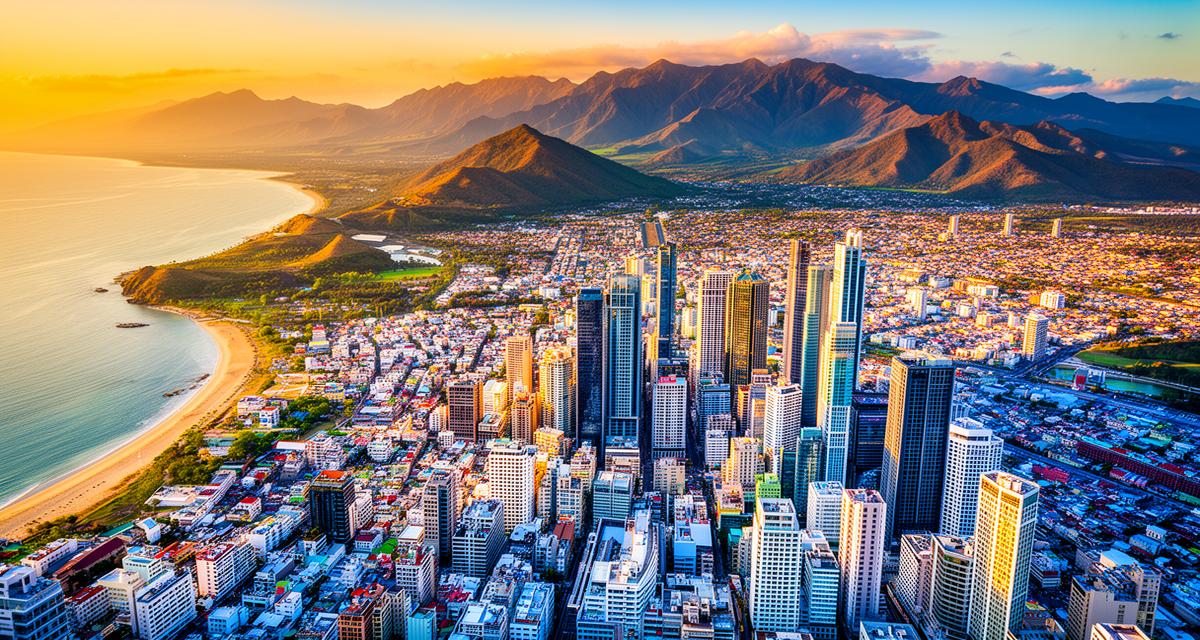
Da Nang has positioned itself as the lifestyle alternative for remote workers who find Saigon's intensity excessive. The beach access, the slower pace, the lower costs even by Vietnamese standards, and the developing infrastructure for digital workers have created genuine community. The My Khe beach area and An Thuong have the highest concentration of cafés and spaces catering to laptop workers. The trade-off is smaller community, fewer networking opportunities, and a social scene that can feel limiting after the initial beach excitement fades.
The nomad community in Vietnam operates differently than in more established destinations like Thailand. It is smaller, more dispersed, and less organized into formal events and meetups. Finding your people requires more initiative; the ready-made social infrastructure of Bali or Chiang Mai does not exist here. Those who prefer self-directed networking and intimate communities may find this appealing; those who want busy event calendars and large nomad populations should calibrate expectations accordingly.
Families & Long-Term Living
Families with children find Vietnam offers adventure and value but also challenges. International schools exist in major cities but are fewer and often more expensive relative to local costs than in other Southeast Asian destinations. Quality varies significantly.
Vietnamese culture genuinely loves children, and the attention and warmth extended to children creates a supportive environment. The family-oriented society means children are welcome in social situations in ways that can surprise Western parents.
Healthcare for families is available but requires navigation. Major hospitals in Ho Chi Minh City and Hanoi handle pediatric needs well, while resources in smaller cities are more limited. Having health plans and contingencies matters more here than in more developed countries.
Long-term visa options for families remain challenging. The lack of clear paths to permanent residency creates uncertainty that many families find stressful. Planning for visa issues and having contingency options is part of long-term life here.
Raising children in Vietnam exposes them to a fascinating culture and language, but requires accepting certain trade-offs in infrastructure, environmental quality, and educational options. Families who thrive here typically prioritize adventure and cultural experience over convenience.
The international school landscape in Ho Chi Minh City and Hanoi has developed considerably, with options following British, American, Australian, and IB curricula. Costs range from relatively affordable to eye-watering for the prestigious institutions. Waiting lists at popular schools require advance planning; showing up and expecting immediate placement may lead to disappointment. The quality differential between schools is significant, and research before committing helps avoid expensive mistakes.
Vietnamese society's warmth toward children manifests in ways that can feel intrusive to Western sensibilities. Strangers touch your child's face, comment on their appearance, offer unsolicited advice. This attention comes from genuine affection, not boundary violation, though it can feel overwhelming. Children themselves often enjoy the attention; parents learn to accept it as cultural difference rather than threat. The trade-off is environments where children are genuinely welcomed – restaurants, shops, public spaces – in ways that child-unfriendly Western establishments do not match.
The cost of providing your children with international education, quality healthcare, and the safety margins you require adds up in ways that can surprise those who came for the value. Vietnam is extraordinarily cheap for basic living; raising children to international standards is less cheap. The domestic help that makes family life manageable, the school fees, the international health insurance, the air purifiers for bedrooms, the regular escapes to cleaner environments – budget accordingly. Those who arrive expecting to raise children on backpacker budgets discover that children have different requirements.
Politics & Society
The political conversation in Vietnam, as of early 2026, is one most foreigners only register through its edges. There are no campaign posters in Hanoi's Old Quarter, no televised debates breaking into the evening. What there is, instead, is a slow reshuffling at the top of the Communist Party that has reshaped which ministries answer their phones, which provincial officials get visited by inspectors, and which long-running anti-corruption files suddenly produce arrests. Since General Secretary Nguyen Phu Trong's death in July 2024 and To Lam's consolidation of power that followed, the country has been governed by a leadership that is more security-minded, more centralised, and visibly less patient with the elite drift that defined the last decade. Foreigners notice this mostly in second-order ways – a work-permit office in Ho Chi Minh City that is suddenly stricter about paperwork, a property developer whose project stalls because his political patron has been removed, a friend's Vietnamese partner explaining over coffee why a particular minister is no longer mentioned. The system itself does not change. The people running it have.
Understanding who governs Vietnam requires accepting a structure that does not map onto Western expectations. The Communist Party of Vietnam is the only legal political party. The National Assembly exists, holds sessions, passes laws, and is elected on a five-year cycle, with the next vote due in 2026. But candidates are screened through the Vietnam Fatherland Front, and the meaningful contest happens within the Party itself, between factions, regions, and patronage networks rather than between competing platforms. Power sits in four pillars – the General Secretary, the President, the Prime Minister, and the Chair of the National Assembly – with the General Secretary historically first among equals. To Lam, who came up through the Ministry of Public Security and ran the anti-corruption campaign as Trong's enforcer before succeeding him, has unusually concentrated authority for a Vietnamese leader. The 14th Party Congress, scheduled for early 2026, is the event that will actually determine the country's direction for the next five years. The National Assembly election that follows will reflect, not produce, that outcome.
What this means in practice is that the country runs efficiently within narrow lanes. Major infrastructure decisions get made and implemented at speeds that democracies struggle to match – the metro lines opening in Hanoi and Ho Chi Minh City, the expressway network connecting the coast, the industrial parks absorbing manufacturing that has left China. The trade-off is the absence of the institutional friction that, elsewhere, slows bad ideas as well as good ones. There is no opposition press to expose a flawed project, no parliamentary inquiry to interrogate a contract, no constitutional court to review a law. The 'blazing furnace' anti-corruption campaign that has continued under To Lam has produced thousands of disciplinary cases and removed two presidents and a National Assembly chair within a single 18-month stretch, which is either evidence of a system cleaning itself or evidence of factional consolidation, depending on whose reading you trust. Both are probably partially true.
For foreign residents, the policy environment has shifted in concrete and traceable ways since 2023. The e-visa was extended to 90 days and opened to citizens of all countries in August 2023, and that change has held – it is now the default entry route for most independent arrivals and the foundation of the de-facto remote-worker setup that exists in lieu of a formal digital nomad visa. Vietnam has not created such a visa and shows no sign of doing so; the official line is that remote work on a tourist or business visa is not permitted, but enforcement against people working quietly on laptops in District 2 cafés is, in practice, near zero. What has tightened is the work-permit regime for those formally employed in Vietnam. Decree 70 in 2023 and subsequent guidance have raised documentation standards, lengthened processing times, and produced visible enforcement waves in Ho Chi Minh City and Hanoi against language-school teachers and small-business hires whose paperwork was historically informal. Property ownership for foreigners remains restricted to leasehold apartments under the 2014 Housing Law as amended; the long-promised opening to land has not happened and is not on the active legislative calendar.
The civic argument that Vietnamese have with each other – the one that surfaces in long dinners with people you have known for a while, never with people you have just met – is less about the system and more about its costs. The country's economic transformation since đổi mới in 1986 is genuine and visible: a generation that grew up in postwar poverty has watched its children become engineers, designers, and small-business owners. That achievement underwrites a quiet patriotism that even people critical of the Party share. What younger urban Vietnamese argue about, often, is whether the model that produced this growth can produce its next phase. The middle-income trap is a real concern; the demographic window is closing as the workforce ages; the environmental costs of breakneck industrialisation are visible in the air over Hanoi and the Mekong delta's salinisation. None of this becomes opposition politics, because there is no channel for it to become opposition politics. It becomes, instead, a private conversation about emigration, about sending children abroad for university, about hedging.
Stability in Vietnam is real, and it is the country's central offer to foreign residents. Crime against foreigners is rare and almost never violent. The currency has held within a managed band against the dollar for years. The banking system works, the postal system works, the cellular network is excellent and cheap, the courts are slow but not arbitrary in commercial matters that do not touch politics. What stability does not mean is the same thing it means in Lisbon or Kuala Lumpur. It means that the rules will hold as long as the people setting them want them to hold, and that the channel for changing them runs through institutions you cannot access. Most foreign residents make peace with this trade because their own lives do not require those channels. The ones who don't make peace with it leave, usually quietly, after the third or fourth year, when the appeal of the food and the cost of living no longer fully covers the sense of being a guest in a house whose rules you do not get to discuss.
What this leaves you with, if you are considering Vietnam now or thinking about how long to stay, is a country that is unusually clear about what it is. There is no pretence that the National Assembly election in 2026 will change the government, no theatre of pluralism to interpret. The Party will run the country; To Lam or his successor will run the Party; the policy direction will be set by the Congress and executed by the ministries. Foreign residents are welcome on the terms the state offers, those terms are presently generous on entry and tightening on formal employment, and the day-to-day texture of life – the morning phở, the late afternoons on motorbikes, the long weeks where nothing political intrudes at all – continues largely undisturbed. Many of us find that workable for a chapter, fewer find it workable for a life. Both responses are honest, and the country does not particularly mind which one you choose.
Crime & Personal Safety
Writing about safety in Vietnam means starting with an inversion that catches almost every newcomer off guard. The thing most likely to hurt you here is not a person. It is a vehicle. As of late 2025, the Ministry of Public Security and the National Traffic Safety Committee continue to log somewhere in the range of 18,000 to 22,000 traffic deaths per year, depending on the methodology, with motorbike incidents accounting for roughly two-thirds of the total. By contrast, the homicide rate sits at around 1.5 per 100,000 inhabitants — far lower than most regional peers and lower than every country in the Americas. The texture of daily life confirms this asymmetry. You can walk most of Hanoi at midnight without thinking about it. Crossing a six-lane intersection in District 1 in the middle of the afternoon is, statistically, the more dangerous thing you will do that day. Foreign residents who get this proportion right adapt quickly. The ones who arrive braced for street crime and casual about traffic tend to leave with scars they did not expect.
The everyday property crime that does affect foreigners has a specific geography and a specific mechanism. In Ho Chi Minh City, snatch theft from passing motorbikes — a phone, a bag, a camera lifted in a single fluid motion as the rider passes — is concentrated in Districts 1 and 4, around the Pham Ngu Lao backpacker zone, along the riverside in District 2, and at intersections where pedestrians stand visibly distracted. The technique is well-rehearsed and the recovery rate is essentially zero. Hanoi's pattern leans more toward classic pickpocketing in the Old Quarter, around Hoan Kiem Lake on weekend nights, and on overcrowded buses. Da Nang and Hoi An are markedly calmer in this respect, though the latter sees an uptick during peak tourist months. The expat habit that emerges within a few weeks is unconscious: phone in front pocket or hand-gripped, bag strap diagonal across the body and on the inland side of the pavement, no laptop visible in a café window seat. None of this is dramatic. All of it works.
Scams aimed at foreigners cluster around the points where money changes hands and the visitor cannot yet tell what 'normal' looks like. Taxi-meter manipulation remains the most reliable example — the meter that runs at triple speed, the airport pickup at five times the Grab fare, the 'broken meter' that becomes a price negotiation after the destination is reached. The fix is simple and well-known: Grab or Be for cars, Vinasun or Mai Linh for street taxis if neither app works, and a polite refusal of any driver who approaches at the airport curb. Currency exchange scams — the slow count, the swapped denomination — happen at unofficial booths in tourist districts and almost never at banks. The 'friendship' scam around Hoan Kiem, where a friendly local invites the visitor for tea or coffee that becomes an inflated bill at a venue clearly arranged in advance, runs in cycles and tends to surge whenever a wave of new arrivals hits. None of these scams are violent. All of them dissolve quickly once the local price of things becomes legible.
The relationship between foreign residents and the police — Công an, in the everyday phrasing — sits at a particular angle that takes some getting used to. For minor property crime, the realistic level of investigative effort is low. A stolen phone report at the local ward office produces a written record useful for insurance and not much else. Officers are usually polite, often patient, and the language barrier is real outside the major cities. Where police presence becomes much more visible is around anything the state codes as political: protests, religious gatherings outside registered structures, content posted on social media that touches the Party, journalism without accreditation. Foreign residents who stay clear of those frames almost never encounter the security apparatus in any meaningful way. Those who do not — particularly journalists, activists, and people researching sensitive topics — encounter a system that is patient, watchful, and equipped with tools that include visa non-renewal, exit bans, and the kind of administrative friction that is hard to fight from outside.
There is a complication that long-term residents talk about quietly and that newcomers should know about, which is the question of what happens when your own situation is not entirely in order. A meaningful share of foreigners working in Vietnam — particularly in language teaching, small online businesses, and informal employment — operate on tourist or business e-visas that do not, strictly speaking, permit the work being done. Decree 70 in 2023 and the enforcement waves that have followed in Ho Chi Minh City and Hanoi have made this gap more visible. The practical implication for safety reporting is uncomfortable: someone whose own status is irregular tends not to report being scammed, robbed, or assaulted, because the visit to the ward office may produce questions about why they were in the country in the first place. This is not a uniquely Vietnamese problem, but it is a Vietnamese version of it, and it shapes the actual victim statistics in ways that are not visible in any official report. Sorting work-permit status before it becomes a problem is a safety question, not just a paperwork one.
Two narrower risks deserve specific mention because foreign-resident communities recirculate them often. The first is the periodic sting operation against massage parlours, karaoke venues, and bars in entertainment districts of Ho Chi Minh City, Hanoi, and Da Nang, often coinciding with anti-vice campaigns announced at the provincial level. Foreign customers caught in raids on venues offering services that cross legal lines have, in published cases, faced detention, fines, deportation, and visa bans, regardless of what they understood themselves to be paying for. The second is the recurring pattern of drink-spiking and overcharging in specific bar streets — Bui Vien in HCMC most prominently, sections of Ta Hien in Hanoi at weekends — where bills can balloon without explanation and disputes are resolved by physical intimidation more often than by any appeal to the police. These are avoidable risks. They are not random. They are concentrated in a small number of venues that any local who has been around for six months can identify by name.
What Vietnamese themselves discuss when they discuss safety has shifted over the past two or three years in ways that map only loosely onto foreign concerns. The dominant conversations are about traffic — every family has lost or nearly lost someone — about food safety scandals, about online fraud aimed at older relatives, and about the slow-motion environmental risks of air quality in Hanoi during the winter inversion months and saltwater intrusion in the Mekong delta. Petty theft barely registers in these conversations. Violent crime registers even less. The To Lam government's continued anti-corruption campaign has produced visible enforcement against officials, businesspeople, and entire ministries, but the dynamic is largely internal to the elite — for everyday residents, foreign or local, it shows up mostly as administrative caution rather than threat. The country a foreign resident actually lives in, in 2026, is one where the major safety adjustments are about how you ride a motorbike, where you keep your phone, and which side of the regulatory line you stay on. The rest is mostly noise.
Education & Schooling
Schooling is the dimension of Vietnamese life on which foreign families most consistently discover, usually in the second or third month, that the assumptions they brought from home do not translate cleanly. Vietnam's public system is genuinely serious — the country's PISA results in 2012, 2018, and 2022 placed it among the strongest performers in Southeast Asia and ahead of several Western European peers, a fact that surprised the OECD itself enough to commission follow-up studies — and Vietnamese families across class lines treat education as the primary instrument of mobility in a way that is almost civic. As of late 2025, the structure runs from optional kindergarten through five years of primary, four of lower secondary, and three of upper secondary, with the high-stakes university entrance examination at the end shaping almost everything that comes before it. The system is free at the public level for Vietnamese citizens, conducted entirely in Vietnamese, and built around a discipline culture and a teacher-centred pedagogy that even sympathetic foreign observers describe as militarised relative to anything they grew up with.
The first thing a foreign family discovers, usually after a week or two of looking, is that the choice in front of them is sharper and more polarised than the equivalent choice would be in Bangkok, Kuala Lumpur, or Lisbon. Public schools are accessible to foreign children in principle, particularly for families with long-term residence cards, but in practice the language immersion is total — there is no meaningful Vietnamese-as-a-second-language scaffolding inside public classrooms — and the cultural distance from what most Western parents expect of a primary education is wide enough that very few foreign families take this route past the kindergarten years. The middle ground that has emerged over the last decade is the bilingual school, conducted partly in Vietnamese and partly in English, with annual fees in the range of 80 to 250 million VND, roughly 3,200 to 10,000 USD. Names like Vietnam Australia International School, Wellspring, and Albert Einstein School operate at this tier in Ho Chi Minh City and Hanoi, and the segment has grown faster than any other in Vietnamese education through the post-2018 period. The honest reading from families who have used these schools for two or three years is that the bilingual model works well in the lower grades and becomes more uneven by upper primary, when the academic load in both languages starts to compete for the same hours.
True international schools, the third tier, sit at price points that are competitive with Bangkok and Singapore once the full picture is added up, and the Ho Chi Minh City market is where the genuine concentration is. The British International School at An Phu and Tu Xuong, the International School Ho Chi Minh City in District 2, the American International School, the European International School, ABC International, the Saigon South International School in Phu My Hung — each runs a recognised curriculum, employs a substantially expatriate teaching staff, and charges annual tuition in the 350 to 800 million VND range, roughly 14,000 to 33,000 USD, with the upper end pushing into the territory that families who have lived in Singapore or Hong Kong will recognise. Capital and registration fees, transport, lunch, the activity programmes, the IB diploma sitting fees in the upper years — the line items add up in ways that newcomers consistently underestimate by a third in their first budget. Hanoi runs a smaller but reputable cluster anchored by the United Nations International School (UNIS Hanoi), the British International School, and Concordia, with similar pricing. Da Nang has matured into a genuine third option for families on remote-work visas — Singapore International School, Sky-Line International, and the smaller hybrid schools that have grown around Son Tra and My Khe — at price points typically a third lower than Ho Chi Minh City. Hoi An, Nha Trang, and Phu Quoc remain thin markets where the honest answer for school-age children is that the options are limited and the families who succeed there are usually doing some combination of homeschool, online accreditation, and supplementary local classes.
The language question is the one that gets resolved differently in different families and rarely cleanly. Children under seven absorb Vietnamese from local kindergartens, the household helper, and neighbourhood friends in a way that is genuinely impressive and, by the second year, often produces fluency that overtakes what their parents will ever achieve. The window narrows quickly. Children who arrive at nine or ten can become functional in Vietnamese over two or three years if the family commits to it, but the academic register required to keep up in a public secondary school is a different ceiling, and most families who try this route eventually move to a bilingual or international setting by the equivalent of grade six or seven. Teenagers arriving cold are essentially locked out of the local academic track, which is part of why family relocations to Vietnam with high-school-aged children almost always go straight into the international segment from day one. Vietnamese as an extracurricular layer — private tutors at very reasonable rates, the language schools that have proliferated in District 1 and around West Lake — is something most committed families add even when their children are in international schools, partly for cultural integration and partly because long-term residents have learned that genuinely living here is harder without it.
The parallel education economy that surrounds the formal school system is something foreign families rarely anticipate and gradually find themselves inside of. The Vietnamese term is học thêm, supplementary classes, and it functions as the country's equivalent of the Korean hagwon culture or the Japanese juku system. Vietnamese students from primary onward attend evening and weekend classes in mathematics, English, sciences, and the entrance-examination subjects, frequently taught by their own daytime teachers in informal arrangements that everyone understands. The entire social calendar of Vietnamese childhood is shaped by this rhythm in ways that affect foreign children too, particularly in bilingual schools where the local-family expectation that everyone is studying additionally on weekends quietly raises the academic temperature. The 2014 attempt to ban supplementary teaching by the Ministry of Education was widely ignored and quietly abandoned. The 2025 framework now permits it under registration requirements that are inconsistently enforced. Foreign families who fight against this rhythm tend to find their children left behind socially and academically in mixed settings; families who lean into a moderate version of it tend to do better. The middle path, for most, is one or two outside enrichments — usually Vietnamese language and one music or sport — alongside the school workload itself.
The cost reality across the full picture is what tends to recalibrate planning for families considering Vietnam. A family of four sending two children to a top-tier international school in Ho Chi Minh City should budget 35,000 to 55,000 USD per year in tuition alone, plus the secondary costs that typically add another 15 to 20 percent. Bilingual options bring that down to roughly 8,000 to 20,000 USD per child, depending on grade level and school. Public school is essentially free but realistically only viable for families fully committed to Vietnamese-medium education, which is a small minority of foreign residents. The corollary is that Vietnam looks dramatically cheaper than Singapore or Hong Kong on housing, food, and lifestyle but converges sharply on the schooling line item once children are involved. Many families who arrive expecting Southeast Asian discount pricing on education leave the planning conversation having significantly upgraded their income requirement. The visa framework helps marginally — children of work-permit holders are typically covered as dependants on the same TT (temporary residence) visa, which removes one administrative layer — but does not change the economics of where they will actually attend.
Higher education in Vietnam is a landscape in transition that is worth understanding even for families whose children will not study here, because it shapes how Vietnamese themselves think about secondary-school choices. The country's flagship public universities — Vietnam National University with its Hanoi and Ho Chi Minh City campuses, the Hanoi University of Science and Technology, the universities of Da Nang and Hue — are respected regionally but face the structural problem that the most academically ambitious Vietnamese families increasingly send their children abroad for tertiary education, primarily to Australia, the United States, the United Kingdom, Canada, Japan, and South Korea. The 2014 founding of VinUniversity in Hanoi, with its partnerships with Cornell and the University of Pennsylvania, marked the beginning of a small but real domestic premium-private segment, joined since by the British University Vietnam and the foreign branch campuses run by RMIT (the dominant player, with substantial campuses in both major cities), the University of Greenwich, and Western Sydney. For foreign students, the tuition at these institutions is competitive on a global scale and the English-medium instruction makes them genuine options; the domestic public universities remain primarily Vietnamese-medium and are not realistic destinations for foreigners without strong language preparation.
The decision foreign families end up making about Vietnamese schooling is rarely the one they imagined making before they arrived. Couples who came expecting their children to integrate into the local system usually move to bilingual or international by the second year. Families who arrived planning to use international schools sometimes discover that bilingual options serve them well in the early years and free up budget for other things. Single-parent and digital-nomad families with younger children find Da Nang and Hoi An workable in ways that would not be true with teenagers. The pattern that holds across all of these is that Vietnam asks for an active, ongoing decision about education in a way that the European destinations on this site largely do not, because the public system here is not a default that foreign families can comfortably fall into. As of late 2025, the country offers a wider and deeper menu of school options than it did even five years ago, the international segment continues to expand, and the bilingual middle tier is where most of the genuine recent improvement has happened. Families who do their school research before the move, rather than after, tend to find the country dramatically more workable for their children than the families who assume it will sort itself out on arrival.
Pros & Cons at a Glance
What Expats Love
- •Extremely low cost of living with genuine value
- •Rich culture and world-class food traditions
- •Remarkable safety in terms of violent crime
- •Energy of a rapidly transforming society
- •Friendly people who welcome those who make effort
- •Geographic diversity from beaches to mountains to delta
Common Challenges
- •Traffic and noise are genuinely challenging
- •Visa situation offers little long-term security
- •Air quality in major cities is poor
- •Vietnamese language is difficult to learn
- •Bureaucracy is opaque and frustrating
- •Infrastructure, while improving, still has limitations
Written by
Carl S Moller
Founder & Editor, Expat Blueprint
Carl S Moller is the founder and sole editor of Expat Blueprint. He researches and writes every guide himself, working from immigration ministries, tax authorities, national statistics and recent first-hand reporting rather than claiming to have lived in all sixteen countries covered.
Deep Reading
Long-form essays that explore themes relevant to life here.
Explore All Topics
Dive deeper into specific aspects of expat life in Vietnam.





Guides Unique to Vietnam
Topics and perspectives specific to life in Vietnam — questions that only make sense here.
Vietnam's Motorbike Culture: Getting Around in Controlled Chaos
Licensing, buying vs renting, traffic psychology, and why the motorbike defines Vietnamese daily life.
Teaching English in Vietnam: The Most Common First Job for Expats
Pay, qualifications, school types, and the difference between a career and a stepping stone.
Hanoi or Ho Chi Minh City: The North-South Divide That Shapes Every Decision
How Hanoi and HCMC create fundamentally different expat experiences in climate, cost, culture, and community.
Apartment Hunting in Vietnam: Landlords, Deposits, and the Zalo Factor
How renting in Vietnam actually works, from Zalo negotiations to deposit disputes and the unwritten rules of landlord relationships.
Vietnam's Street Food Economy: Eating for $2 and the Culture It Creates
How Vietnam's street food economy shapes daily life, social rituals, and the relationship between cost and community.
Vietnam's Coffee Culture: Cà Phê Sữa Đá and the Café Economy That Structures Daily Life
Vietnam's coffee culture shapes daily routines through cà phê sữa đá rituals and a café economy.
Living Through Tết: Vietnam's Lunar New Year and the Two Weeks That Transform Everything
Tết transforms Vietnam for two weeks every year through mass migration and cultural rituals.
Da Nang: Vietnam's Third City and the Coastal Alternative That Keeps Growing
Da Nang offers a coastal alternative to Hanoi and HCMC with modern infrastructure and lower costs.
Healthcare in Vietnam: Public Hospitals, International Clinics, and the Two-Tier System Expats Navigate
Vietnam's healthcare splits between crowded public hospitals and expensive international clinics.
Vietnam's Visa Renewal Cycle: Extensions, Runs, and the Paperwork That Never Ends
How visa extensions, border runs, and the shifting regulatory landscape shape long-term planning for expats.
Zalo and Vietnam's Digital Layer: The App That Replaced Email, Phone Calls, and Sometimes Conversation
How Zalo dominates communication, landlord relationships, government services, and why WhatsApp is irrelevant.
Leaving Vietnam — When the Visa Clock, the Smog and the Salary Ceiling Finally Agree
Why expats leave Vietnam: visa tightening, salary ceilings, air quality and cultural fatigue — the repatriation patterns nobody plans for in year one.
See how Vietnam compares
Compare costs, WiFi, schools, and regulations with up to three other countries — adjusted for your lifestyle.
Open in Comparison ToolIs Vietnam Right for You?
Vietnam rewards those who embrace its challenges as part of its appeal. The country offers extraordinary value and cultural richness but demands more adaptation than easier destinations. The trade-off is worth it for those with the right temperament.
The sense of being somewhere real, somewhere changing, somewhere that has not been smoothed into international blandness – this is what draws people to Vietnam and keeps them despite the frustrations. It is an experience rather than just a place to live.
For digital nomads seeking maximum value, adventurous retirees, those pursuing cultural depth over convenience, and anyone energized rather than exhausted by challenge, Vietnam offers something genuinely special. It is not for everyone, but for those who are right for it, there is nowhere quite like it.
Vietnam selects for a particular temperament – the adaptable rather than the demanding, the curious rather than the comfortable, those who find friction interesting rather than merely annoying. The country does not try to be easy; the reward is that it remains real. Those smoothed destinations that cater to every international expectation lose something in the smoothing. Vietnam's rough edges are part of what makes it worth experiencing.
The window of Vietnam as discovery may not remain open indefinitely. Da Nang is already transforming under expat attention; Saigon's District 2 has gentrified into something recognizable to international residents; the very affordability that draws people plants seeds of future price increases. Those here now experience a Vietnam that will not persist unchanged. Whether this represents urgency or merely observation depends on your relationship with impermanence.