
Cost of Living in Hungary: Central Europe's Affordable Gem
Monthly costs for expats in Hungary — Budapest rents, grocery prices, transport passes, and the gap between central districts and outer neighbourhood budgets.
8 min read
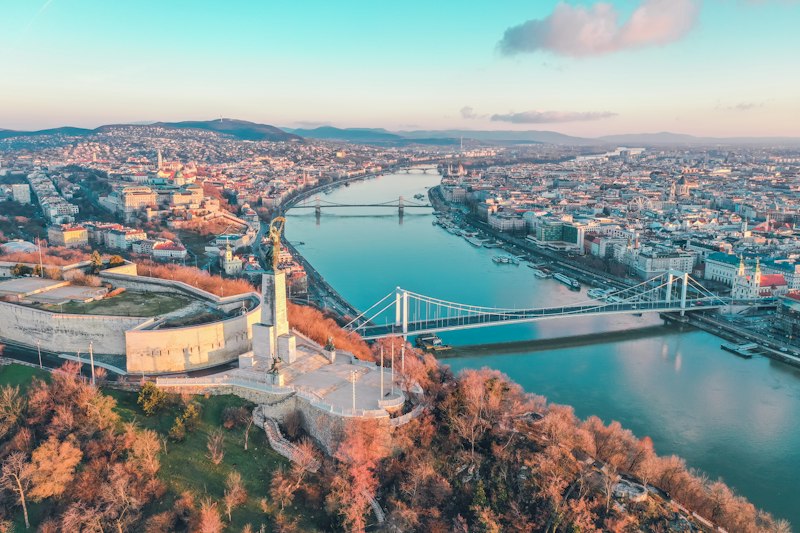
Hungary offers Western European culture at Eastern European prices. With Budapest's stunning architecture, thermal baths, and vibrant cafe scene, it's one of Central Europe's best-value destinations for expats.
Quick Takeaways
- •Monthly budget: €1,000-1,800 for comfortable living in Budapest
- •Rent: €500-800 for a 1-bedroom apartment in central Budapest
- •Dining out: €8-15 for a restaurant meal with drink
- •EU membership means easy access for EU citizens
- •Excellent public transport at €35/month for unlimited travel
Hungary's cost of living defies the mental map most people carry of Central Europe. Newcomers arrive expecting prices halfway between Vienna and Bucharest, only to discover that Budapest delivers a quality of life that feels distinctly Western at price points that remain stubbornly Eastern. The gap between what you get and what you pay creates a kind of cognitive dissonance that takes months to stop questioning.
What makes Hungary's affordability genuinely interesting is not just the low numbers but how they interact with infrastructure and culture. You are not saving money by sacrificing comfort—you are paying less for fast internet, reliable public transport, world-class thermal baths, and a café culture that rivals any European capital. The value proposition is not about cutting corners but about a market that has not yet repriced to match what it delivers.
Housing: European Quality, Affordable Prices
Budapest's housing market offers excellent value compared to Western European capitals. A one-bedroom apartment in central districts (V, VI, VII) costs €500-800/month, while outer districts like Újbuda offer €400-600 for similar quality. The Buda side generally commands 10-15% higher rents than Pest for equivalent apartments, partly due to greener surroundings and hillside views, though Pest offers better nightlife access and flatter terrain for cycling.
Utilities run €80-150/month depending on season—heating costs are significant in winter when old buildings with high ceilings require substantial gas usage. Internet is fast and cheap at €15-20/month for fiber connections through providers like Telekom or Vodafone. Most landlords expect a two-month deposit and prefer bank transfers; some older landlords still insist on cash. Rental contracts typically run one year with a three-month notice period, though shorter terms are negotiable at higher rates.
Outside Budapest, cities like Debrecen, Szeged, and Pécs offer even lower rents—€300-500 for a central apartment. Many buildings feature beautiful pre-war architecture with high ceilings, though these charming flats can be drafty in winter. Newer developments in districts like XIII offer modern amenities and better insulation but less character. The choice often comes down to whether you prioritize Instagram-worthy moldings or lower utility bills.
Food and Dining: Hearty and Affordable
Hungarian cuisine is hearty and satisfying. A traditional lunch menu (soup plus main) at a local étkezde costs €4-6, and these working-class canteens serve authentic food that most tourists never discover. Restaurant dinners run €10-20 for generous portions of goulash, chicken paprikás, or töltött káposzta (stuffed cabbage). Upscale spots like Borkonyha or Babel demand €40-80 for tasting menus, but even these remain affordable by Western European fine-dining standards.
Grocery shopping at chains like Aldi, Lidl, or Tesco costs €200-300/month for a single person cooking regularly. The Nagy Vásárcsarnok (Great Market Hall) is touristy but still offers quality produce and meat, while neighborhood markets like Fény utca in Buda provide better value without the crowds. Hungarian wines are excellent and remarkably cheap—quality bottles from Villány or Eger start at €3-5, and even premium selections rarely exceed €15.
Budapest's cafe culture is thriving with espresso at €1.50-2.50 and flat whites around €3-4. The ruin bar scene in the Jewish Quarter offers cheap drinks—local beers €2-4, cocktails €5-8—though touristy spots near Szimpla Kert charge premium prices. International cuisine has exploded in recent years, with quality Vietnamese, Middle Eastern, and Italian options throughout the city. Vegetarian and vegan eating has become genuinely convenient, with dedicated restaurants and mainstream menus adapting.
What the market hall economy does over time is subtler than simple savings. Shopping at the Nagy Vásárcsarnok or a neighborhood piac recalibrates your understanding of what food should cost—not in abstract terms but in the muscle memory of reaching for your wallet. When a kilogram of fresh peppers costs less than a single capsule coffee, when a bottle of Egri Bikavér that would retail for fifteen euros in London sits at three, the entire pricing architecture you carried from your previous life starts to feel arbitrary. Returning to Western European supermarkets after months in Hungary produces a reverse sticker shock that never fully fades, because you now know what the actual production cost looks like without the layers of margin.

If this is the part you keep circling back to, Find Your Place is the workbook we built around exactly that question — where fits my life? See how it works.
Getting Around: Excellent Public Transit
Budapest has one of Europe's best public transport systems. A monthly pass costs €35 for unlimited metro, tram, and bus travel across four metro lines, trams, buses, and the HÉV suburban railway. Single tickets are €1.50 but validators are strict and controllers frequent—fines run €30-60 for riding without valid tickets. The system runs until midnight with comprehensive night buses covering all major routes.
Taxis are affordable—€5-10 for most city trips using Bolt or the official Főtaxi app. Many expats cycle, especially along the Danube, using the MOL Bubi bike-sharing system at €25/month for unlimited 30-minute rides. Car ownership is unnecessary for most and parking is expensive in central areas—€100-150/month for a dedicated spot. If you do drive, fuel runs about €1.50/liter and annual road tax depends on engine size.
Domestic trains through MÁV are cheap and increasingly reliable after recent investments. Budapest to Lake Balaton costs €8-12, to Debrecen €15-20, and to Vienna about €25-40 for the 2.5-hour journey. Wizz Air and Ryanair connect Budapest to all of Europe with fares starting at €20-30 if you book ahead and pack light.
Healthcare: Good Value Private Options
Hungary has a public healthcare system for residents, but most expats opt for private care due to shorter waits and English-speaking staff. GP visits cost €30-50, specialist consultations €50-80, and dental cleanings €30-50. Blood work runs €30-60 for standard panels, MRI scans €150-250—still a fraction of Western European prices.
Private clinics like FirstMed, Rózsákert Medical Center, and Duna Medical Center offer English-speaking doctors and modern facilities. Mental health services are growing, with therapy sessions at €50-80 per hour from English-speaking psychologists. Private health insurance costs €80-150/month through providers like Medicover, Generali, or international options like Cigna.
Hungary is known for dental tourism—crowns run €200-400, implants €600-1,200, and complex procedures cost 50-70% less than in Western Europe. Thermal bath culture supports overall wellness, with entry to historic baths like Széchenyi or Gellért at €20-30, while neighborhood baths cost €8-15. Mobile and telecom plans round out monthly expenses at €15-25 through Telekom, Vodafone, or Yettel.
Lifestyle and Entertainment and taxes and Financial Planning
Budapest offers rich cultural life at affordable prices. Concert tickets €10-30 for most shows, cinema €6-8 with English-language screenings at Cinema City and Corvin, museum entry €5-10 for permanent exhibitions. Major festivals like Sziget command higher prices—€80-300 for multi-day passes—but smaller events like Budapest Wine Festival or Design Week remain accessible.
Gym memberships run €30-50/month at chains like LifeGym or City Gym, while yoga classes at studios like Jóga Sangha cost €8-12 per session. Co-working spaces cost €150-250/month—Kaptar, Mosaik, and Loffice are popular options with reliable internet and networking events. Many expats work from cafes, though purchasing something every few hours is expected etiquette.
Weekend trips to Vienna (2.5 hours by train), Prague (5 hours), or Croatian beaches are easy and affordable. Lake Balaton offers summer escapes just 1.5 hours from Budapest with beach access, sailing, and wine touring in nearby Badacsony. The outdoors scene has grown with hiking groups exploring the Buda Hills and cycling clubs doing weekend rides along the Danube.
The affordability of cultural participation creates habits that become expensive to maintain anywhere else. When opera tickets cost twelve euros and a jazz club charges five for entry, you attend things you would have skipped at London or New York prices. Over months, this casual cultural consumption becomes part of your identity—you become someone who goes to concerts on Tuesday evenings, who drops into gallery openings, who sees foreign films in small cinemas. These habits, built cheaply in Budapest, feel like necessities rather than luxuries, and the sticker shock of trying to maintain them elsewhere reveals how much of cultural engagement is gated by price rather than interest.
Hungary's tax system holds a particular appeal for freelancers and remote workers. The country operates a flat 15% personal income tax—refreshingly simple compared to the progressive brackets of most EU neighbors. Social contributions add roughly 18.5% for employees, bringing the total tax burden to about 33-35% of gross salary, which remains competitive within the European Union.
The KATA simplified small business tax regime has been a major draw for freelancers, offering a flat monthly payment regardless of income for those earning under approximately €45,000 annually. Recent legislative changes have restricted eligibility, particularly for those invoicing domestic companies, so verifying current rules before structuring your work through KATA is essential. Many expats who arrived specifically for KATA have had to restructure—a reminder that tax advantages in any country remain subject to political winds.
Banking in Hungary functions well once established, though the initial setup requires patience and documentation. OTP Bank dominates the market; Erste and K&H offer English-language services. Opening accounts requires residence registration, which itself requires a rental contract—the circular dependency that characterizes much of Hungarian bureaucracy. International options like Wise and Revolut complement local banking for cross-border transfers, and most expats maintain both local and international accounts.
The forint (HUF) introduces currency considerations that Euro-zone countries avoid. While daily prices are quoted in forints, many expats think in euros and convert mentally. Exchange rate fluctuations between the forint and euro can shift your effective cost of living by 5-10% over a year. Those earning in euros or dollars benefit when the forint weakens but face the opposite risk. Some expats maintain euro savings while spending in forints, creating a natural hedge against currency movements.
The mental conversion between forints and euros becomes second nature in ways that reveal how much of spending is psychological rather than rational. You stop converting every purchase and start thinking in forints, which paradoxically makes you more careful with money because the larger numbers create a sense of consequence that euros flatten. A dinner for two at eight thousand forints feels significant in a way that twenty euros does not, even though they are roughly equivalent. This cognitive quirk works in your favor—the forint's denomination encourages mindfulness about spending that euro-denominated countries inadvertently discourage. Long-term residents report that this mental recalibration persists even after leaving Hungary, a residual awareness of value that the forint somehow instills.

Monthly Budget Breakdown
Budget living runs approximately €800-1,100 per month, covering shared housing, home cooking, and public transport. Comfortable living sits at €1,200-1,800 monthly for your own apartment, regular dining out, and cultural activities. Premium living reaches €2,000-3,000 with a luxury apartment, full social life, and frequent regional travel.
Hungary offers exceptional value for Central European living. The combination of beautiful architecture, rich culture, excellent transport, and affordability makes it ideal for expats seeking European lifestyle without Western European prices. The flat tax system and relatively straightforward financial infrastructure add practical advantages that extend beyond simple cost comparisons.
Written by
Carl S Moller
Founder & Editor, Expat Blueprint
Carl S Moller is the founder and sole editor of Expat Blueprint. He researches and writes every guide himself, working from immigration ministries, tax authorities, national statistics and recent first-hand reporting rather than claiming to have lived in all sixteen countries covered.
Keep the thread going
One reflective note every few weeks, and 20% off anything in the workbook shop the moment you sign up. The code is valid through 31 August 2026.
Unsubscribe any time. We never share your address. The 20% code is valid through 31 August 2026.