
Hungary's Hidden Gems: Where Expats Live Beyond Budapest
Budapest or beyond? Debrecen, Szeged, and Pécs offer expats real affordability and culture that the capital increasingly prices out of comfortable reach.
8 min read
While Budapest dominates the expat scene, Hungary offers diverse living options from university cities to lakeside retreats. Each destination provides a different slice of Hungarian life at remarkably affordable prices.
Quick Takeaways
- •Budapest: The clear choice for most expats with best infrastructure and opportunities
- •Debrecen: Hungary's second city with lower costs and university atmosphere
- •Szeged: Sunny university city with beautiful architecture
- •Pécs: Cultural capital with Mediterranean vibes
- •Lake Balaton: Summer lifestyle and growing year-round community
The conversation about where to live in Hungary begins and essentially ends with Budapest for most expats. The capital concentrates infrastructure, international community, English-language services, and lifestyle amenities so thoroughly that choosing elsewhere requires specific reasons—university ties, a partner from the region, or a deliberate pursuit of deeper Hungarian immersion.
Yet the secondary cities reveal a Hungary that Budapest's cosmopolitan sheen obscures. Debrecen's quiet confidence, Szeged's sunlit squares, Pécs's Mediterranean warmth, and Lake Balaton's seasonal rhythms each offer something Budapest cannot. The expats who settle outside the capital rarely do so by default—they've made a conscious trade, exchanging convenience and community for authenticity, space, or a pace of life that Budapest's energy makes impossible. Hungary's compact geography means the 'wrong' choice is always correctable—no city sits more than a few hours from any other.
Budapest: The Undisputed Capital
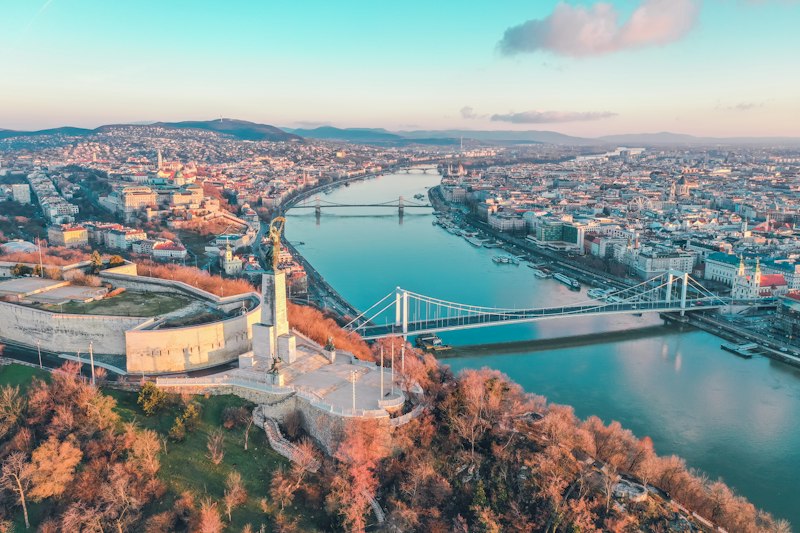
Budapest is where 95% or more of expats settle, and with good reason. The city offers world-class architecture, vibrant culture, excellent food scene, and surprisingly affordable living by European standards. The Danube divides hilly Buda from flat Pest, each side with distinct character—Buda feels residential and green, Pest urban and energetic.
Key districts include District V (downtown, touristy but architecturally stunning), District VI Terézváros (central and lively, good restaurant scene), District VII Jewish Quarter (ruin bars, nightlife, and creative energy), District XI Újbuda (residential, family-friendly, excellent schools), District XII (hillside living, quiet streets, access to nature), and District XIII (up-and-coming, good value, increasingly trendy). Commute times vary significantly—peak-hour traffic makes driving impractical, but the metro connects key areas efficiently.
The expat community is substantial with regular meetups through InterNations and Budapest Expats, international schools like the American International School and British International School, and English-friendly services throughout the city center. Fast internet, abundant co-working spaces, and thriving cafe culture make Budapest ideal for remote workers who want European charm without Western European prices.
The Buda-Pest divide creates genuinely different daily lives that the bridge-connected map obscures. Living in Buda means hillside walks, quieter evenings, proximity to nature, and a residential calm that feels almost suburban despite being minutes from the center. Living in Pest means flat terrain for cycling, vibrant street life, restaurants and bars within walking distance, and an urban energy that pulses visibly. Couples who split their time between Buda and Pest apartments describe crossing the bridge as moving between cities rather than neighborhoods, and the choice of side often reveals more about an expat's personality and life stage than any questionnaire could—Buda for those seeking refuge, Pest for those seeking stimulation, and the bridges for those who want the option of both.
Debrecen: The Eastern Capital
Hungary's second-largest city offers a more affordable and authentically Hungarian experience than cosmopolitan Budapest. Home to the University of Debrecen with its highly-regarded medical and engineering programs, the city has youthful energy and a growing international community—particularly medical students from across Europe, the Middle East, and Asia who create unexpected diversity.
Rent runs 30-40% cheaper than Budapest—a central one-bedroom costs €300-450/month in desirable areas near Nagytemplom (the Great Church) or along the tree-lined boulevards. The city has good infrastructure with Forum and Malompark shopping centers, modern healthcare facilities at Kenézy Hospital, and regular train connections to Budapest (2.5 hours, €15-20). English-speaking services are limited compared to the capital, making basic Hungarian genuinely useful here.
Best for those seeking lower costs, a quieter pace, or connections to the university—many expats initially come as students or faculty and stay for the lifestyle. The Hortobágy National Park nearby offers unique puszta (plains) landscapes with traditional horseshows and birdwatching. The Nagyerdő (Great Forest) park on the city's edge provides swimming, thermal baths, and peaceful walks.
The medical student community creates an unexpected cosmopolitanism that distinguishes Debrecen from other Hungarian secondary cities. Students from Iran, India, Nigeria, Norway, and dozens of other countries populate the university district, creating a demand for international cuisine, English-language services, and multicultural social spaces that would not otherwise exist in a city of this size. The result is a peculiar duality—Debrecen feels simultaneously deeply Hungarian and surprisingly international, with kebab shops next to traditional étkezde canteens and study groups conducted in English spilling out of cafés that also serve Hungarian regulars their afternoon espresso.

Deciding where to live is slow work, and most of the useful thinking happens away from the screen — walking, cooking, on a train. Audible's 30-day free trial — suits that stage: a few books about places you're considering, listened to before you commit to anything.
Affiliate disclosure: the Audible link above is an affiliate link. If you start a trial through it, Expat Blueprint may earn a small commission at no extra cost to you. It never changes what we recommend. Read the full disclosure.
If this is the part you keep circling back to, Find Your Place is the workbook we built around exactly that question — where fits my life? See how it works.
Szeged: The City of Sunshine
Known as Hungary's sunniest city, Szeged charms with its Art Nouveau architecture, prestigious university, and relaxed atmosphere. The city center, entirely rebuilt after a devastating 1879 flood, features beautiful concentric boulevards and squares that give it an unusually coherent architectural identity—something most Hungarian cities, shaped by centuries of piecemeal development, cannot claim.
Living costs are significantly lower than Budapest—apartments €250-400/month for quality spaces near the center. The University of Szeged brings international students and cultural events, including the famous Open-Air Festival each summer in Dóm Square. The city's culinary identity centers on fish soup (halászlé) and Pick salami, both taken seriously as local heritage rather than tourist novelties.
The Tisza River gives Szeged a waterfront character that Budapest's Danube provides on a grander scale. Riverside cafés, rowing clubs, and sunset walks create daily rhythms that feel unhurried. The Serbian border is minutes away, adding cross-border shopping and cultural exchange to daily possibilities.
Szeged suits expats who want authentic Hungarian life, meaningfully lower costs, and don't need Budapest's extensive English-language infrastructure. The two-hour train to Budapest makes occasional city visits practical, but Szeged rewards those who settle into its own rhythms rather than treating it as a satellite of the capital.
Pécs: The Cultural Capital
Located in southern Hungary near the Croatian border, Pécs has a distinctly Mediterranean feel with its mild climate, outdoor cafes, and layers of history visible in every street. A UNESCO World Heritage site for its early Christian necropolis, the city blends Turkish mosque architecture, Roman ruins, and Hungarian Art Nouveau in ways that feel organic rather than curated.
The University of Pécs attracts international students—particularly in medicine and humanities—creating cosmopolitan atmosphere surprising for a city of 145,000. Cultural events run year-round, from the Pécs Days festival in September to the Zsolnay Light Festival in June. The Zsolnay Cultural Quarter, built around the famous ceramics factory, hosts galleries, concerts, and creative businesses.
Rent is very affordable at €250-400/month for quality apartments in the historic center. Transport to Budapest takes 3 hours by train or car, making spontaneous weekend trips less convenient. The wine regions of Villány and Szekszárd are just 30-40 minutes away, offering excellent red wines and wine tourism infrastructure. Pécs suits culture lovers, retirees, or anyone seeking Hungary's warmest climate with genuine character.
Lake Balaton: Lakeside Living and choosing Your Hungarian Base
Central Europe's largest lake offers a unique lifestyle—summer resort atmosphere with growing year-round communities. The northern shore (Balatonfüred, Tihany, Badacsony) attracts the cultured crowd with volcanic hills, historic villas, and wine production, while the southern shore (Siófok, Fonyód) draws families and younger visitors with shallow beaches and party atmosphere. Keszthely at the western tip offers both a university town atmosphere and Festetics Palace grandeur.
Summer brings crowds and significantly higher prices, but off-season offers peaceful lakeside life with dramatic moods—autumn storms and winter fog give the lake entirely different character. Rent varies dramatically by season: €300-500 off-season can double or triple during July and August. Many properties are holiday homes, making year-round rentals scarcer but available with persistence. The housing market for buyers has grown competitive, with many Germans and Austrians purchasing vacation homes.
Best suited for those prioritizing nature, water sports, sailing, and a relaxed pace. Budapest is 1.5-2 hours away by car or train for occasional city visits. Year-round infrastructure is developing slowly but steadily—Balatonfüred has the most consistent services, while smaller villages can feel genuinely quiet off-season. The cycling path around the lake offers 200 kilometers of flat, scenic riding.
The seasonal transformation tests whether you can sustain contentment through quiet winters that feel qualitatively different from quiet summers. Summer Balaton is social infrastructure—neighbors on terraces, impromptu barbecues, sailing companions, beach friendships that form with the ease of shared sunshine. Winter Balaton is solitude with a view—fog on the water, empty cycling paths, closed restaurants, and the particular silence of a resort area in hibernation. Some people find winter Balaton meditative and restorative, a counterbalance to summer's sociability. Others discover that the quiet is simply too quiet, that contentment requires more human activity than a frozen lake and a wood stove can provide. The honest answer to whether Balaton suits you year-round depends on your tolerance for seasonal extremes of company.
For most expats, Budapest is the obvious and correct choice. It offers the best infrastructure, largest international community, most job opportunities, and easiest English-language daily life. The question is not whether Budapest is good—it is—but whether its particular energy matches what you need at this point in your life.
Consider other cities if you prioritize lower costs, university connections, cultural immersion, or waterfront lifestyle. Debrecen, Szeged, and Pécs each offer genuine alternatives with distinct characters. Lake Balaton suits those who prioritize nature and seasonal rhythms over urban amenities.
Many expats base in Budapest and explore other regions for weekend trips or seasonal stays. Hungary's small size means everywhere is accessible—no city is more than 3-4 hours from the capital. This compact geography means choosing Budapest doesn't mean missing the rest of Hungary, but choosing a secondary city does mean accepting distance from the capital's unique resources.
The honest assessment most expats arrive at: Budapest first, for a year or two, to understand Hungary through its most accessible lens. Those who stay longer sometimes drift outward, discovering that the real Hungary—slower, quieter, less polished—has its own rewards that the capital's energy can obscure.
The compact geography paradoxically makes the city choice feel both more and less consequential than in larger countries. More consequential because in a country this small, your base city defines your daily Hungary comprehensively—there is no vast hinterland to absorb through occasional long-distance travel. Less consequential because anywhere in Hungary sits within a day trip of anywhere else, meaning a suboptimal choice can be corrected with a two-hour train ride rather than a cross-country relocation. This accessibility removes the pressure that immovable distance creates in larger nations, allowing experimentation that more geographically sprawling countries punish.

Best City Verdict
Budapest is the clear winner for most expats, offering unmatched infrastructure, culture, and international community. It's affordable by European standards while providing genuine world-city amenities.
Secondary cities suit specific needs—Debrecen and Szeged for budget-conscious living or university ties, Pécs for culture and climate, Lake Balaton for nature lovers. Most expats find Budapest provides the ideal balance of cost, convenience, and quality of life in Central Europe.
Written by
Carl S Moller
Founder & Editor, Expat Blueprint
Carl S Moller is the founder and sole editor of Expat Blueprint. He researches and writes every guide himself, working from immigration ministries, tax authorities, national statistics and recent first-hand reporting rather than claiming to have lived in all sixteen countries covered.
Keep the thread going
One reflective note every few weeks, and 20% off anything in the workbook shop the moment you sign up. The code is valid through 31 August 2026.
Unsubscribe any time. We never share your address. The 20% code is valid through 31 August 2026.