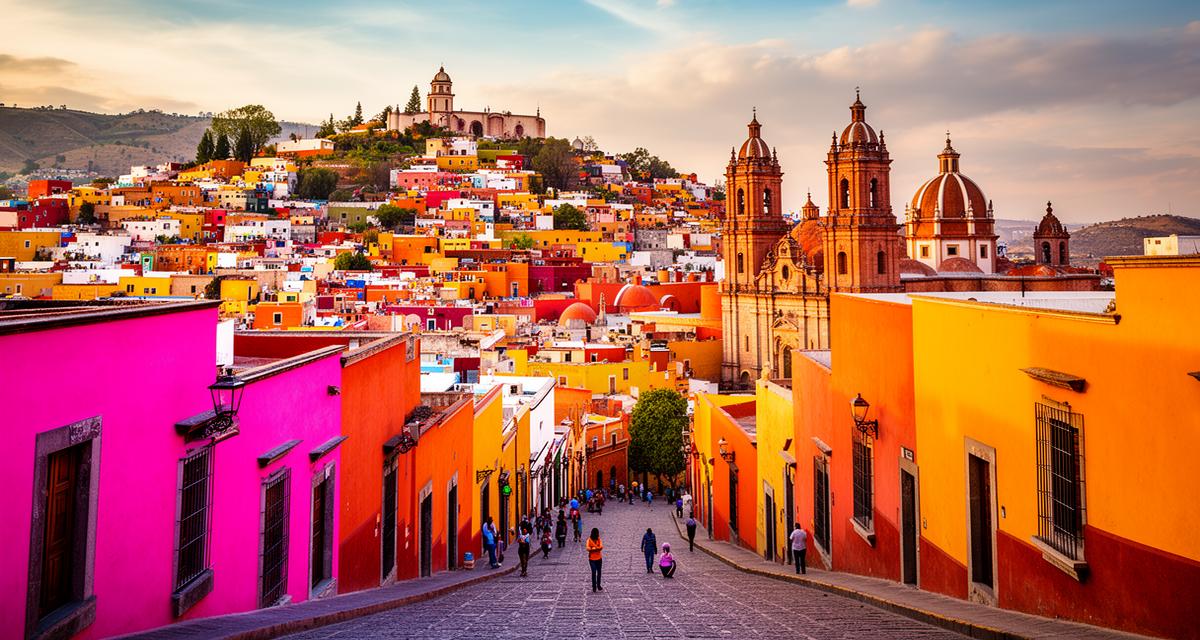
Roma and Condesa: The Gentrification Dilemma Expats Live Inside
Roma and Condesa attract expats with walkability, cafés, and art deco charm — but rising rents and gentrification tensions shape the neighbourhood's future.
8 min read
Everyone arrives in Roma or Condesa. The tree-lined streets, the café culture, the walkability — it feels like the Mexico City you imagined. What takes longer to see is how your presence is reshaping the neighborhood you fell in love with.
Quick Takeaways
- •Roma and Condesa have seen rent increases of 40-80% in dollar terms over five years, driven partly by remote workers paying in foreign currencies
- •Long-term Mexican residents are being displaced as landlords convert apartments to short-term rentals and furnished units targeting foreigners
- •The neighborhoods' appeal — walkability, cafés, parks, safety — was built by decades of local investment now being consumed by newcomers
- •Living in Roma or Condesa as an expat means existing inside a gentrification process that your rent payments actively accelerate
- •Alternative colonias offer similar quality of life at lower cost and with less displacement pressure, but require more Spanish and more effort
There is a moment, usually within the first week, when a newly arrived expat in Mexico City stands on a corner in Roma Norte or walks through Parque México in Condesa and thinks: this is it. The architecture is beautiful. The coffee is excellent. The streets feel safe and human-scaled. English is spoken in enough places to be comfortable. The rents, compared to Brooklyn or London or Sydney, seem almost absurdly low. Everything about the neighborhood confirms the decision to come.
What takes longer to notice — months, sometimes — is that the neighborhood you are enjoying exists in a state of rapid transformation, and that transformation is not neutral. The cafés that feel so welcoming opened because landlords realized they could charge higher rents to businesses targeting foreigners. The furnished apartment you found on a Facebook group was, until recently, home to a Mexican family paying a fraction of what you pay. The gentrification of Roma and Condesa is not a distant sociological concept. It is the water you swim in.
How Roma and Condesa Became the Center of Expat Mexico City
The story of Roma and Condesa as expat neighborhoods is surprisingly recent. Twenty years ago, Roma was known primarily for its architecture — the Art Nouveau and Art Deco buildings that survived the 1985 earthquake — and for a bohemian energy that attracted Mexican artists, writers, and students. Condesa, anchored by Parque México and Parque España, was a middle-class residential neighborhood with a Jewish heritage and a quiet, leafy character. Both were interesting but not destinations. Polanco was where the money was. Coyoacán was where the tourists went.
The transformation began with Mexican gentrification before foreign arrivals accelerated it. Young Mexican professionals priced out of Polanco discovered Roma's architectural charm and lower rents in the early 2010s. Restaurants, galleries, and boutiques followed. Condesa's parks and walkability made it a natural extension. By the time international remote workers discovered Mexico City around 2020, the infrastructure for a comfortable English-adjacent life was already in place. The pandemic simply poured fuel on a fire that was already burning.
What makes Roma and Condesa particularly vulnerable to rapid gentrification is their physical form. The neighborhoods are dense, walkable, and architecturally coherent — qualities that are rare in Mexico City's sprawl. They are also small. Roma Norte, the most popular section, covers roughly forty blocks. Condesa is even smaller. When demand concentrates in such a compact area, prices respond quickly and dramatically.
The Rent Economics: Who Pays What and Who Gets Pushed Out
The rental dynamics in Roma and Condesa operate on a two-tier system that is becoming increasingly stark. A long-term Mexican tenant paying in pesos under a traditional lease might pay eight to twelve thousand pesos monthly for a two-bedroom apartment — roughly four hundred to six hundred dollars. A furnished apartment marketed to foreigners on platforms like Airbnb, Facebook expat groups, or international rental sites commands fifteen to thirty thousand pesos or more for a similar space. Some landlords have begun quoting rents directly in dollars, which would have been unthinkable five years ago.
The economic logic for landlords is straightforward and, from their perspective, rational. Why rent to a Mexican professional for ten thousand pesos on a year-long lease when a furnished unit marketed to foreigners generates twenty-five thousand pesos monthly with no lease protection for the tenant? The result is a steady conversion of long-term rental stock into short-term furnished units. Each conversion removes one apartment from the market available to local residents and adds one to the inventory serving transient foreigners.
The displacement this creates is not dramatic in the way that eviction notices or demolitions are dramatic. It is gradual and quiet. A family's lease expires and the landlord declines to renew, citing renovations. The renovations produce a furnished unit with a Nespresso machine and a listing on Furnished Finder. The family moves to Narvarte or Del Valle or Iztapalapa — neighborhoods that are perfectly fine but that lack the specific qualities that made Roma and Condesa desirable. The neighborhood's character shifts incrementally, and the people who built that character are no longer there to maintain it.
If this is the part you keep circling back to, Find Your Place is the workbook we built around exactly that question — where fits my life? See how it works.
What Gets Lost: The Slow Erosion of Cultural Texture
The most visible change in Roma and Condesa is commercial. The torterías and fondas that served lunch to office workers are being replaced by specialty coffee shops, coworking spaces, and restaurants with English menus and Instagram-friendly interiors. This is not inherently bad — the new businesses are often excellent, and they create jobs — but it represents a homogenization of the commercial landscape that strips away the neighborhood's distinctiveness.
A fonda that has served comida corrida for thirty years occupies a specific cultural niche. It is where the neighborhood's plumber eats lunch, where the señora from the papelería takes her break, where the rhythms of daily life are visible and shared. When that fonda closes because the landlord triples the rent to attract a brunch restaurant, something is lost that cannot be replicated by the new tenant, however good their avocado toast might be.
The cultural erosion extends beyond commerce. The social fabric of a Mexican neighborhood is built on relationships that develop over years — the portero who knows everyone in the building, the tienda owner who extends credit to regulars, the señora who watches the street from her balcony. Transient residents, even well-intentioned ones, do not build these relationships. They do not attend the building's junta de vecinos. They do not know the garbage collection schedule. They do not participate in the informal mutual-aid networks that make Mexican neighborhoods function. Their presence is economically significant but socially thin.
Living Inside the Contradiction: Expat Complicity and Awareness
The uncomfortable truth about living in Roma or Condesa as a foreign remote worker is that awareness of the problem does not resolve the contradiction. You can understand gentrification intellectually, sympathize with displaced residents genuinely, and still be the person whose rent payment incentivizes your landlord to convert another apartment. The structural dynamics operate regardless of individual intentions.
Some expats respond to this by seeking out peso-denominated leases, learning Spanish, shopping at local markets, and making genuine efforts to integrate. These are meaningful choices that reduce the cultural distance between foreigners and the neighborhood, but they do not change the underlying economics. Your peso-denominated lease still reflects a market shaped by dollar-earning demand. Your presence in the neighborhood still contributes to the demographic shift that makes it attractive to more foreigners.
Others respond with a kind of defensive dismissal — arguing that gentrification is inevitable, that they are contributing to the economy, that Mexican landlords are making their own choices. These arguments are not wrong, exactly, but they are incomplete. The question is not whether gentrification would happen without foreign remote workers — it would, driven by Mexican economic forces — but whether the speed and character of the transformation are shaped by foreign demand. The answer, clearly, is yes.
The most honest position is probably the most uncomfortable: you can live in Roma or Condesa, enjoy what makes them wonderful, and acknowledge that your enjoyment comes at a cost that is borne disproportionately by people with less economic power. This is not a reason to leave, necessarily, but it is a reason to be thoughtful about how you inhabit the space.
Beyond the Bubble: Colonias That Offer a Different Equation
The concentration of expats in Roma and Condesa is not inevitable. Mexico City is enormous — over sixteen hundred colonias spread across sixteen alcaldías — and many neighborhoods offer quality of life comparable to Roma and Condesa without the same displacement pressures. The barrier is not quality but comfort: these neighborhoods require more Spanish, more cultural navigation, and more willingness to be the only foreigner on the block.
Narvarte, immediately south of Roma, has similar architecture, excellent food options, and rents that are thirty to forty percent lower. Its commercial streets are still dominated by Mexican businesses — ferreterías, papelerías, carnecerías — and the neighborhood retains the mixed-use character that Roma is losing. The trade-off is fewer specialty coffee shops, less English, and a Metro that is slightly farther from some areas.
Coyoacán offers a village-like atmosphere within the city, with cobblestone streets, plazas, and a cultural density — UNAM, museums, markets — that Roma cannot match. San Rafael, north of Roma, is undergoing its own transformation but at an earlier stage, with rents still reflecting its working-class heritage. Santa María la Ribera, with its Moorish Kiosk and Museo del Chopo, attracts Mexican artists and students in the way that Roma did fifteen years ago.
Choosing one of these neighborhoods does not solve gentrification — your presence still creates demand — but it distributes that demand more broadly and embeds you in a part of the city where Mexican daily life is the dominant culture rather than a backdrop.
Where This Goes: The Trajectory That Nobody Controls
Mexico City's government has begun responding to the gentrification pressure, though the response remains tentative and piecemeal. Proposals to regulate short-term rentals, restrict dollar-denominated leases, and require rental registration have been discussed but not meaningfully implemented. The political dynamics are complicated: landlords benefiting from higher rents have influence, and the revenue that foreigners bring to the local economy is real and welcome.
The most likely trajectory is that Roma and Condesa continue to transform into neighborhoods that resemble their international counterparts — pleasant, expensive, cosmopolitan, and culturally generic. The specific qualities that made them attractive — the tension between elegance and grit, the coexistence of fondas and galleries, the feeling of being in a distinctly Mexican place — will diminish as the demographic and commercial mix shifts further toward a globalized norm.
For expats arriving now, the choice is not between participating in gentrification or avoiding it. You are already inside the process. The choice is how consciously you engage with it — whether you learn the neighborhood's history, support its remaining local businesses, build relationships that extend beyond the expat bubble, and think honestly about the trade-offs embedded in the comfortable life these streets provide. Roma and Condesa are still beautiful. They are still wonderful places to live. But the cost of that beauty is higher than the rent you pay, and it is being paid by people you may never meet.
The Neighborhood You Love and the Cost You Share
Roma and Condesa offer something that is genuinely rare: walkable, beautiful, culturally rich urban neighborhoods in a vast and often overwhelming city. The appeal is not manufactured or superficial. These are legitimately wonderful places to live, and the expats who choose them are not wrong to be drawn in.
But the story of these neighborhoods is also a story about power, money, and displacement — about what happens when a community's desirability becomes its vulnerability. Living here honestly means holding both truths at once: that you are lucky to be here, and that your luck has consequences for others. It is not a comfortable position, but comfort was never the point. Understanding is.
Written by
Carl S Moller
Founder & Editor, Expat Blueprint
Carl S Moller is the founder and sole editor of Expat Blueprint. He researches and writes every guide himself, working from immigration ministries, tax authorities, national statistics and recent first-hand reporting rather than claiming to have lived in all sixteen countries covered.
Keep the thread going
One reflective note every few weeks, and 20% off anything in the workbook shop the moment you sign up. The code is valid through 31 August 2026.
Unsubscribe any time. We never share your address. The 20% code is valid through 31 August 2026.