Japan on a Budget: Real Monthly Costs for Expats in 2024
Life in Japan costs less than most expect — real rent, food, transport, and healthcare expenses across Tokyo, Osaka, and the smaller cities expats prefer.
8 min read
Japan defies easy cost categorization. Tokyo can rival New York, yet excellent ramen costs $7 and the trains run with precision that makes car ownership unnecessary. The country rewards those who adapt to Japanese systems rather than importing foreign habits—and punishes those who insist on Western comforts at every turn.
Quick Takeaways
- •A comfortable expat lifestyle costs ¥250,000-400,000/month ($1,700-2,700) outside central Tokyo
- •Housing is the biggest variable: tiny in Tokyo, spacious and cheap in regional cities
- •Food is surprisingly affordable when eating Japanese; imported Western food costs triple
- •Healthcare is excellent and affordable through the national insurance system
- •The weak yen (2023-2024) has made Japan significantly more affordable for dollar earners
- •Regional cities offer dramatically better value than Tokyo
Japan's cost of living resists the neat summaries that most expat guides attempt. The country contains Tokyo, one of the world's most expensive cities, alongside regional towns where a comfortable apartment costs less than a parking space in Manhattan. The currency's recent weakness has made everything cheaper for those earning in dollars or euros, creating a window of affordability that longtime residents find almost disorienting after decades of Japan being synonymous with expense.
What makes Japan's costs genuinely unusual is how they reward adaptation. Expats who embrace Japanese food, transportation, and daily systems find themselves living well on modest budgets. Those who insist on imported products, Western-style housing, and familiar conveniences pay premiums that can double or triple their monthly expenses. The gap between these two approaches is wider in Japan than almost anywhere else, making lifestyle choices the single largest determinant of whether the country feels affordable or punishing.
Housing Costs Across Japan
Japanese housing follows a clear pattern: Tokyo is expensive and small, everywhere else is surprisingly affordable and spacious.
In central Tokyo (Shibuya, Shinjuku, Minato), expect ¥150,000-250,000/month ($1,000-1,700) for a small one-bedroom (25-35m²). Move to eastern Tokyo (Sumida, Koto) or the suburbs and prices drop to ¥80,000-130,000. The trade-off is commute time, though Japanese trains make long commutes comfortable.
Osaka offers Tokyo-level urban life at 30-40% lower housing costs. Central Osaka one-bedrooms run ¥70,000-120,000. Kyoto, Kobe, and Nagoya offer similar value. These cities provide genuine urban experience without Tokyo's premium.
Regional cities are remarkably affordable. Fukuoka, Sendai, Hiroshima, and Sapporo offer modern apartments for ¥50,000-80,000/month. Space increases dramatically—what costs ¥150,000 in Tokyo buys three times the space in Fukuoka.
Japanese apartments are measured in tatami mats or square meters. A 1K (one room plus kitchen) is typically 20-30m². A 1LDK (living/dining/kitchen plus bedroom) runs 35-50m². By Western standards, spaces are compact but efficiently designed.
Utilities run ¥15,000-25,000/month for electricity, gas, and water. Air conditioning in summer and heating in winter spike costs significantly—summer electricity bills can double in poorly insulated buildings, which remain common even in newer construction. Internet is fast and affordable at ¥4,000-6,000/month with fiber widely available. Many apartments require key money and deposits totaling 3-5 months rent upfront, a financial reality that catches newcomers off guard.
Food and Dining: From Konbini to Kaiseki
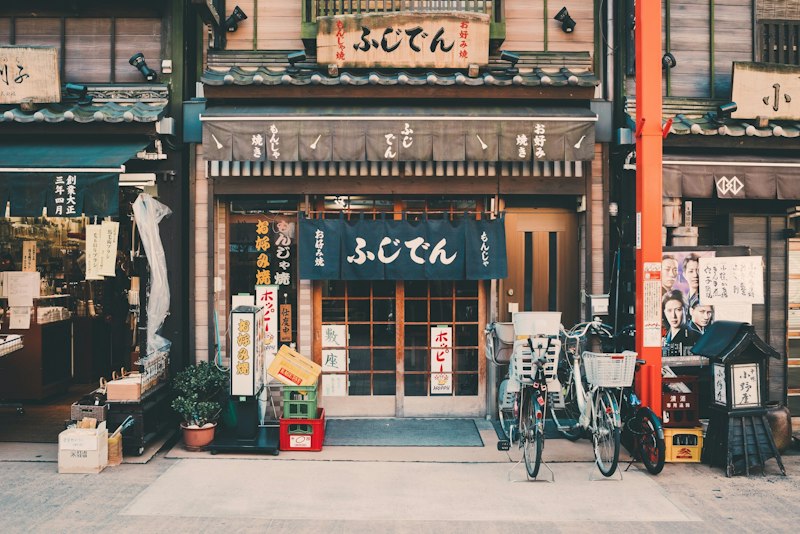
Japanese food culture offers extraordinary value at the everyday level while luxury options remain expensive. Your eating habits determine your budget more than almost anywhere. The distinction matters because Japan does not force you into either extreme—the same neighborhood that houses a ¥30,000 kaiseki restaurant also has a ¥500 gyudon chain and a convenience store with ¥300 onigiri that taste genuinely good.
Convenience stores (konbini) are genuinely useful for budget eating. 7-Eleven, Lawson, and FamilyMart offer quality meals for ¥300-600 ($2-4). Onigiri, bento boxes, and prepared foods are fresh and satisfying. Many expats rely on konbini more than expected.
Casual restaurants offer excellent value. Ramen shops charge ¥700-1,200 ($5-8). Gyudon (beef bowl) chains like Yoshinoya run ¥400-600. Conveyor belt sushi costs ¥100-200 per plate. You can eat very well for ¥1,500-2,000 per day.
Supermarkets are more affordable than restaurants for cooking at home. Grocery costs run ¥30,000-50,000/month for a couple. Evening discounts (20-50% off) on prepared foods make supermarket dining economical. The timing game becomes second nature—arriving at 7pm for 20% stickers and 8:30pm for half-price markdowns transforms grocery economics.
Imported and Western food changes the equation. A block of imported cheese costs ¥800-1,500. Wine starts at ¥1,000 for basic bottles. Western restaurants charge ¥2,000-4,000 per person. Specialty imports are expensive.
Drinking culture is active but manageable. Izakaya (Japanese pubs) offer all-you-can-drink deals for ¥1,500-2,500. Beer at convenience stores costs ¥200-300. Strong Zero and other cheap drinks are popular. A night out costs ¥3,000-6,000 depending on choices.

If this is the part you keep circling back to, Find Your Place is the workbook we built around exactly that question — where fits my life? See how it works.
Getting Around: Transportation Costs
Japan's transportation infrastructure is famously excellent, and the costs reflect a system designed around public transit rather than car ownership.
Urban train and subway systems are the primary mode of transport. A typical Tokyo commute runs ¥200-400 each way. Monthly commuter passes (teiki-ken) offer significant savings—a ¥15,000-25,000 monthly pass can pay for itself quickly. The system is clean, punctual, and safe.
IC cards (Suica, Pasmo, ICOCA) work across most transit systems nationwide and at convenience stores. They simplify payment and offer small discounts. Every resident should have one.
The Shinkansen (bullet train) connects major cities efficiently but expensively. Tokyo to Osaka runs ¥14,000 one way. JR Pass is available only for tourists, not residents. Regional rail passes offer some savings for frequent travelers.
Car ownership is expensive and often unnecessary in cities. Cars require mandatory inspections (shaken) costing ¥100,000+ every two years. Parking in Tokyo can cost ¥30,000-50,000/month. Insurance, fuel, and tolls add further costs. Many urban expats never drive.
Bicycles are practical and popular. Used bikes cost ¥5,000-15,000. Bicycle parking is organized and affordable. For local errands and short commutes, bikes often beat transit.
Taxis are expensive (¥410-730 starting fare) but useful for late nights when trains stop around midnight. Taxi apps like GO and DiDi make booking easier.
Healthcare: Excellent and Affordable
Japanese healthcare combines high quality with reasonable costs through mandatory national insurance. It is one of Japan's genuine advantages for residents.
National Health Insurance (NHI) or Employees' Health Insurance is mandatory for all residents. Premiums vary by income and municipality—typically ¥15,000-40,000/month. Coverage is comprehensive, including dental and prescription drugs.
Patient copays are standardized at 30% of costs (10% for elderly, 20% for children in many areas). A doctor visit costs ¥1,000-3,000 out of pocket. Prescriptions are similarly affordable. Annual out-of-pocket maximums protect against catastrophic costs.
Quality is high across the system. Japan has more hospital beds and MRI machines per capita than almost anywhere. Wait times are generally short. The challenge is language—English-speaking doctors require research to find.
Dental care is covered by NHI for basic treatments. Cleanings, fillings, and extractions are affordable. Cosmetic dentistry and premium treatments cost more. Many expats find Japanese dental care excellent value.
Mental health coverage has improved but remains stigmatized and less developed than physical healthcare. English-speaking therapists are rare and expensive. This is an area where Japan lags.
Prescription medications are affordable and high quality. Pharmacies are professional and well-stocked. Some medications available elsewhere may not be approved in Japan or require special procedures to obtain.
Building Your Japan Budget
Japan's costs reward adaptation. Those who embrace Japanese systems live well; those who insist on imported lifestyles pay premiums.
A tight budget of ¥180,000-250,000/month ($1,200-1,700) works in regional cities or Tokyo's edges. It requires modest housing, Japanese food, limited Western products, and careful spending. English teachers often manage at this level.
The comfortable middle ground of ¥300,000-450,000/month ($2,000-3,000) provides a nice apartment in most cities outside central Tokyo, regular dining out, entertainment, domestic travel, and comfortable daily life. This is realistic for many professional expats.
A premium lifestyle of ¥500,000-800,000/month ($3,400-5,400) enables central Tokyo living, international school for children, regular Western food and products, frequent travel, and comfortable lifestyle without significant restrictions.
Key recommendations: Consider cities beyond Tokyo seriously—Osaka, Fukuoka, and Kyoto offer excellent quality of life at lower costs. Embrace Japanese food and systems; resistance is expensive. Budget for high move-in costs in your first year. Learn enough Japanese to navigate daily life—it saves money and opens options.
The weak yen (2023-2024) has made Japan exceptionally affordable for those earning in dollars or euros. This may not last, but current conditions make Japan more accessible than it has been in years.
Japan rewards patience and adaptation. The first months are expensive and challenging. As you learn the systems, find the value options, and build local knowledge, costs decrease and quality of life increases.
Written by
Carl S Moller
Founder & Editor, Expat Blueprint
Carl S Moller is the founder and sole editor of Expat Blueprint. He researches and writes every guide himself, working from immigration ministries, tax authorities, national statistics and recent first-hand reporting rather than claiming to have lived in all sixteen countries covered.
Keep the thread going
One reflective note every few weeks, and 20% off anything in the workbook shop the moment you sign up. The code is valid through 31 August 2026.
Unsubscribe any time. We never share your address. The 20% code is valid through 31 August 2026.