
Beyond the EPS: Why Medical Tourists End Up Staying in Colombia
The EPS and prepagada dual system offers expats affordable coverage, but enrollment friction, regional quality gaps, and specialist access shape the reality.
9 min read
Colombia's healthcare system consistently ranks among Latin America's best—US-trained doctors, JCI-accredited hospitals, and prices that make American expats question everything they knew about medical costs.
Quick Takeaways
- •Healthcare ranked #22 globally by WHO (ahead of US at #37)
- •Costs typically 50-80% less than United States
- •Many doctors trained in US, Europe with excellent English
- •EPS mandatory for formal employment; prepagada optional upgrade
- •Major cities have JCI-accredited international hospitals
Colombia's healthcare system consistently outperforms its reputation. Expats arrive expecting developing-world medicine and find JCI-accredited hospitals, US-trained specialists, and a multi-tiered system that offers genuine choice between public coverage and private luxury. The WHO ranks Colombia's healthcare twenty-second globally—ahead of the United States at thirty-seventh—and that ranking reflects real outcomes, not just infrastructure aesthetics.
What surprises most newcomers isn't any single impressive hospital or unusually skilled doctor. It's the accessibility. When a specialist consultation costs forty dollars and a comprehensive blood panel runs sixty, the entire relationship with preventive care changes. Expats who avoided annual checkups at home suddenly schedule them routinely. The system rewards engagement in ways that feel quietly revolutionary for anyone accustomed to rationing their own healthcare around cost.
Understanding Colombia's Healthcare Tiers
Colombia runs a multi-tiered healthcare system that's surprisingly sophisticated. Understanding the layers helps you navigate care effectively from the first month rather than discovering the structure through expensive misunderstandings.
The EPS—Entidades Promotoras de Salud—forms the mandatory public and private hybrid that covers everyone formally employed. Contributions run roughly 12.5 percent of salary. You choose an EPS provider from options including Sura, Sanitas, and Nueva EPS, and that provider manages your care network and contracts with specific clinics and hospitals. Coverage is comprehensive but can involve waits that private alternatives bypass.
On top of or instead of EPS, prepagada—prepaid private medicine—provides faster access, better facilities, and expanded services at $50 to $200 monthly depending on the plan level and provider. Most expats with stable income add prepagada to their EPS or use it as their primary coverage. Private pay outside the insurance structure is the third path: given Colombian prices, paying out-of-pocket for a specialist at $50 to $80 is financially rational for healthy expats who want maximum flexibility and encounter medical needs infrequently.
What distinguishes Colombia's system from cheaper-but-chaotic alternatives is the institutional sophistication behind the low prices. Fundación Santa Fe in Bogotá and Fundación Valle del Lili in Cali hold JCI accreditation—the same standard that Mayo Clinic meets—and their research output contributes to global medical knowledge. The affordability comes from lower labor costs and different malpractice economics, not from compromised standards. Expats who've used healthcare systems across multiple Latin American countries consistently rate Colombia's as the most professional, the most transparent in pricing, and the least likely to produce the unpleasant surprises that erode trust in unfamiliar medical environments.
Where Expats Get Care
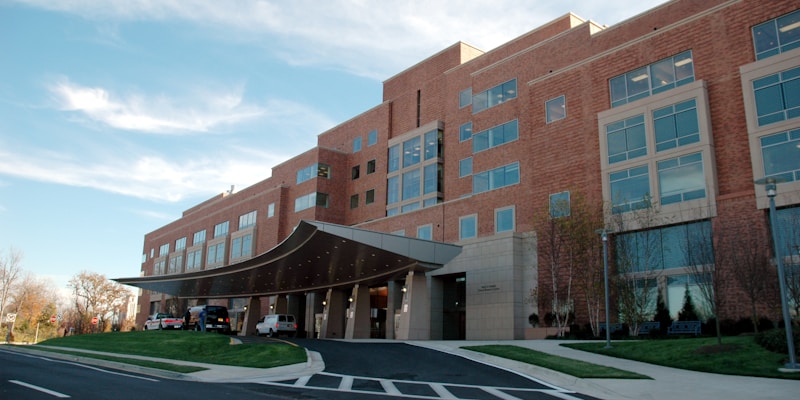
Colombia's top hospitals meet international standards, and several hold JCI accreditation that benchmarks against the best hospitals globally. In Medellín, Clínica Las Américas is large, comprehensive, and popular with the expat community for its English-speaking capacity and breadth of specialties. Hospital Pablo Tobón Uribe is a research hospital with excellent specialist access across disciplines. Clínica El Rosario operates two locations with strong reputation for surgical care. Clínica Medellín provides convenient multi-location coverage for general and specialist needs throughout the city.
Bogotá's Fundación Santa Fe is Colombia's most prestigious hospital and holds JCI accreditation—the facility that Colombian specialists reference when discussions of medical excellence arise. Fundación Cardioinfantil is regarded as a top cardiac center in all of Latin America. Hospital Universitario San Ignacio brings teaching hospital resources and comprehensive coverage as a Javeriana University affiliate. Clínica del Country is popular specifically with expats for its English-speaking staff and streamlined experience.
Cartagena's healthcare infrastructure is more limited by scale. Clínica Madre Bernarda is the largest private facility, and Hospital Bocagrande handles tourist and expat needs adequately. Serious or complex cases often require transfer to Barranquilla or Medellín, which is a realistic limitation worth knowing before a medical emergency rather than during one.
Cali offers Fundación Valle del Lili—JCI-accredited and research-focused in ways that attract complex regional cases—alongside Clínica Imbanaco for comprehensive services and Centro Médico Imbanaco for outpatient-focused care at accessible pricing.
Land Well takes this further than an article usefully can — 70 pages built around one question: how will daily life actually work there? See what it covers.
Real Costs: What You'll Actually Pay
Colombian healthcare prices consistently shock expats from the United States, Canada, and Europe, and the surprise consistently runs in the right direction. A GP visit at a private facility costs $20 to $40. Specialist consultations—cardiology, dermatology, orthopedics—run $40 to $80. Emergency room visits cost $50 to $150 depending on the care provided.
Diagnostic procedures show the same pattern. A comprehensive blood panel is $30 to $80. An X-ray costs $20 to $50. An ultrasound runs $40 to $80. An MRI costs $150 to $300—often less than an American insurance copay for the same scan. A CT scan runs $100 to $250. A colonoscopy costs $200 to $400.
Dental care is where Colombia's value proposition becomes almost surreal for patients from North America. A cleaning costs $25 to $50. A filling runs $30 to $60. A root canal is $100 to $250. A crown costs $200 to $400. A dental implant runs $800 to $1,500. Full mouth reconstruction that would cost $50,000 or more in the United States comes in at $5,000 to $15,000—which explains why dental tourism to Colombia has become a dedicated industry.
Major surgical procedures continue the pattern. An appendectomy costs $2,000 to $4,000. Knee replacement runs $8,000 to $15,000 compared to $30,000 to $50,000 in the United States. LASIK eye surgery for both eyes costs $1,500 to $2,500. Cosmetic procedures that drive a significant portion of Colombia's medical tourism—rhinoplasty at $2,500 to $5,000, breast augmentation at $3,000 to $5,000—attract patients specifically because the quality-to-price ratio is difficult to match anywhere in the Western hemisphere.
Insurance: Navigating Your Options
Choosing the right coverage depends on your visa status, income stability, and personal risk tolerance. If you're working formally with a work-permission visa, EPS enrollment is mandatory and your employer handles registration and payment processing. Choosing your EPS carefully matters—Sura and Sanitas generally carry the best reputations for service quality and facility networks among the major providers.
Retired or self-employed expats have more flexibility. Voluntary EPS enrollment allows contributions based on declared income, with a minimum of roughly $80 monthly, providing full coverage including medications. This suits people with chronic conditions requiring ongoing care. Private insurance only—local plans from Seguros Bolivar or Sura at $100 to $250 monthly, or international plans from Cigna or Allianz at $200 to $500 monthly—offers better flexibility for healthy people who value choice over comprehensive network coverage. The pay-as-you-go approach—banking what you'd spend on premiums and paying cash for visits—works for genuinely healthy expats given that most visits cost under $100, though a major emergency could generate $10,000 or more in costs without coverage.
For those on EPS, adding prepagada transforms the experience measurably. Colsanitas has the largest network and reliable coverage across cities. Sura Prepagada provides excellent Medellín coverage particularly. Colmédica covers Bogotá well and suits those based primarily in the capital.
Coverage gaps deserve attention before you need the coverage. Pre-existing conditions trigger waiting periods across most local plans. Mental health coverage is often limited or requires specific riders. Dental almost always requires separate coverage rather than being bundled into general health insurance. Understanding these gaps before a situation activates them prevents the frustration of discovering exclusions under pressure.
Pharmacies and Medications
Colombia's pharmacy system is accessible and affordable, operating through major chains—Farmatodo and Drogas La Rebaja appear throughout cities—as well as hospital pharmacies for specialized medications. Pharmacists can recommend and dispense common treatments directly, which makes minor ailments faster and cheaper to address than systems requiring a GP visit for every prescription.
Medication costs reflect the same price structure as hospital care. Antibiotics for a full course run $5 to $15. Monthly blood pressure medication costs $10 to $30. Birth control pills run $5 to $15 monthly. Insulin is heavily subsidized and very affordable. Allergy medication costs $5 to $10. Generic versions of most medications are widely available and trusted—quality is regulated and substituting a Colombian generic for a branded European equivalent is standard practice.
Controlled substances—opioids, certain psychiatric medications, and other regulated categories—require prescriptions and documentation. Expats managing chronic conditions should bring documentation when traveling and establish with a local doctor who can write Colombian prescriptions for ongoing needs. Three-month prescription supplies are often possible once established with a local physician, and EPS coverage includes most essential medications with small copays for those enrolled.
Getting established with a local GP early simplifies medication management considerably. Beyond writing prescriptions, a Colombian GP who knows your history becomes a useful navigator of the system—able to refer you appropriately, advise on which facilities suit specific needs, and communicate with specialists on your behalf. The investment in finding and establishing with a good GP in your first month pays returns throughout your time in Colombia.

Emergency Care and Safety Considerations
Emergency situations require knowing basic protocols before they occur. The national emergency number is 123. The fire service is reached at 119. A dedicated medical emergency line is 125. Police respond at 112. Storing these in your phone during your first week is practical preparation rather than anxiety.
Colombian law requires all hospitals to provide emergency stabilization regardless of ability to pay—a legal protection that means no one is turned away in a genuine emergency. Private hospitals provide faster care, more comfortable environments, and stronger English capacity. Public hospitals handle major trauma and operate as the backbone of the emergency system. Payment and insurance details are sorted after stabilization at major facilities, following the internationally standard triage-first protocol.
Safety context matters for emergency preparedness generally. Colombia's transformation has been real and significant, but awareness remains appropriate. Petty theft occurs in tourist areas and on public transport—phone and laptop visibility attracts attention that doesn't end well. Using official taxis or app-based rides rather than street hails eliminates a category of risk that catches visitors off guard. Neighborhoods vary dramatically in safety, and local knowledge about which areas require more caution and at what hours is worth acquiring from established residents rather than learning through experience.
The mental shift around healthcare safety takes longer than most expats anticipate. Colombia's transformed reality doesn't immediately override years of media-shaped assumptions. Some newcomers spend their first months anxious about hospital visits, imagining scenarios that bear no resemblance to the modern, well-staffed facilities they actually encounter. The shift happens gradually—after a smooth emergency room visit, after a specialist resolves something efficiently, after comparing bills with friends back home and realizing the quality gap runs in the opposite direction from what they expected. Long-term residents often describe a moment when they stopped thinking of Colombian healthcare as 'surprisingly good' and started simply thinking of it as good. That recalibration, once it happens, changes how you experience not just medical care but your entire sense of security in the country.
Your Colombia Healthcare Action Plan
Before arrival, research EPS options if you plan to work formally, and arrange international travel insurance to cover the first months before local coverage is established. Bring a three-month supply of any essential medications, carry prescription documentation with generic drug names, and get copies of your medical records to share with Colombian providers. Knowing your blood type and having vaccination records organized simplifies the first medical interactions.
In the first month, register with your chosen EPS if required or arrange private coverage that matches your situation. Find a GP you're comfortable with, locate the nearest quality hospital and nearest twenty-four-hour pharmacy, and schedule a baseline health screening—comprehensive panels run $30 to $80 and establish reference values for future care. Finding a dentist early is particularly worthwhile given the price advantage.
Colombia's healthcare is a genuine competitive advantage for expats—not a compromise you accept in exchange for lower living costs, but an actual improvement over what most Western health systems deliver at accessible prices. The system rewards those who engage proactively: scheduling the preventive care they've been deferring, addressing dental needs without financial pain, and using the specialist access that the costs here make genuinely routine. Many expats report better healthcare experiences in Colombia than in their home countries, which is the kind of reversal that takes time to believe and longer to get used to.
Written by
Carl S Moller
Founder & Editor, Expat Blueprint
Carl S Moller is the founder and sole editor of Expat Blueprint. He researches and writes every guide himself, working from immigration ministries, tax authorities, national statistics and recent first-hand reporting rather than claiming to have lived in all sixteen countries covered.
Keep the thread going
One reflective note every few weeks, and 20% off anything in the workbook shop the moment you sign up. The code is valid through 31 August 2026.
Unsubscribe any time. We never share your address. The 20% code is valid through 31 August 2026.